Vectorless RAG Explained: Beyond Embeddings and Vector Databases Artificial Intelligence practitioners often assume that Retrieval Augmented Generation (RAG) automatically means chunking documents, embedding them, and storing them in a vector database. That assumption is understandable but technically incomplete. RAG fundamentally means augmenting a language model with retrieved external knowledge before generating an answer. The retrieval mechanism does not have to rely on embeddings or vector similarity. Recently, a new family of approaches often referred to as Vectorless RAG has gained attention. These systems retrieve information without relying on dense embeddings or vector databases. Instead, they rely on document structure, lexical…
-
-
Learn how to fine tune LLMs with expert tips. Discover how to fine tune llm for superior AI performance and tailor models to your needs.
-
Discover the top natural language processing applications shaping 2025. Explore innovative uses of NLP and how they impact various industries. Click to learn more!
-
Unlocking the Power of Feature Selection In machine learning, choosing the right feature selection techniques is critical for model success. Too many or too few features can negatively impact performance. This listicle presents seven key feature selection techniques to improve your model's accuracy, reduce training time, and enhance interpretability. Learn how to leverage methods like Filter, Wrapper, and Embedded approaches, along with PCA, RFE, LASSO, and Mutual Information, to identify the most impactful features for your data. This knowledge empowers you to build more efficient and effective machine learning models. 1. Filter Methods (Univariate Selection) Filter methods represent a crucial…
-
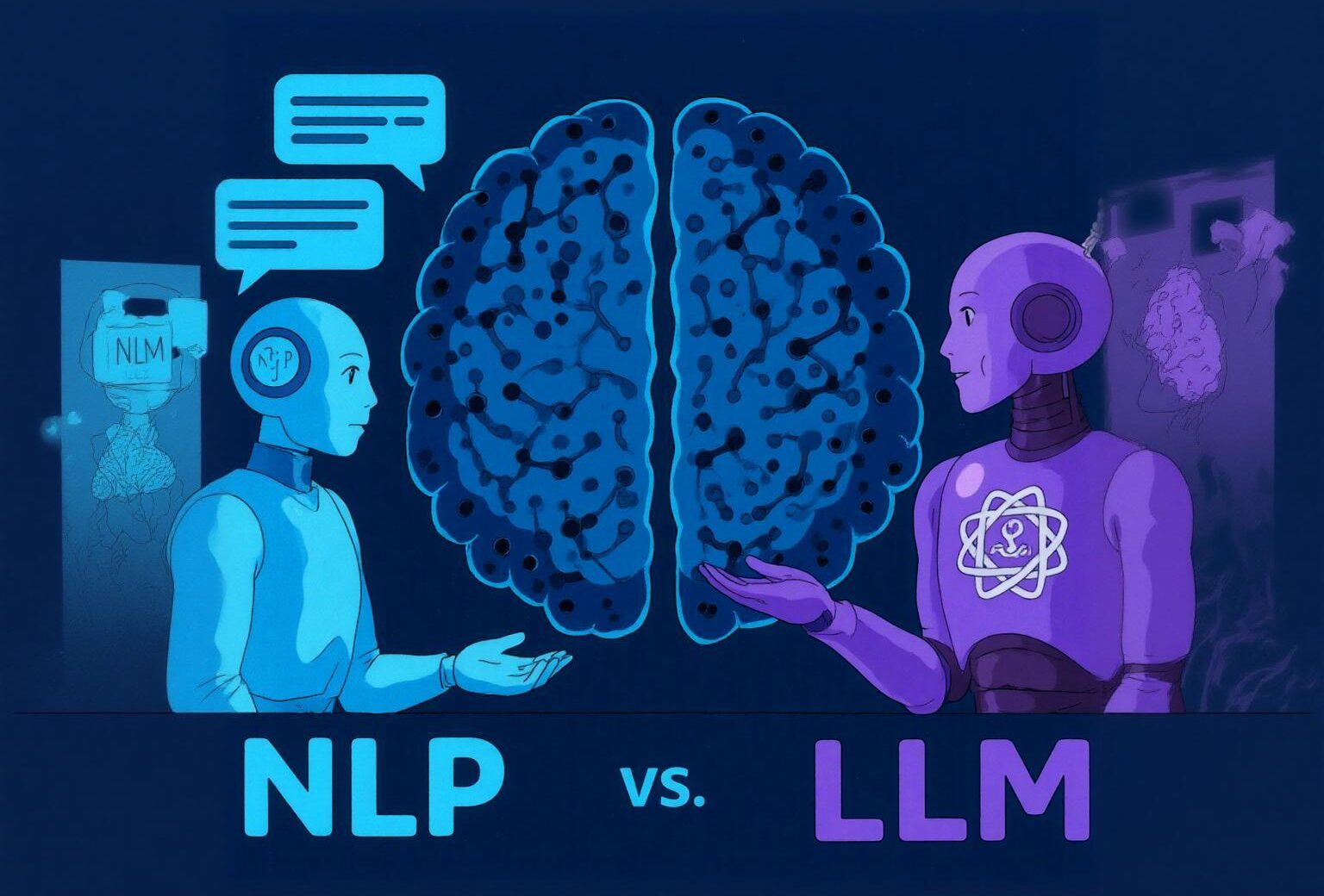
Introduction Large Language Models (LLMs) are revolutionizing Natural Language Processing (NLP), enabling machines to generate and interpret human language with unprecedented accuracy and creativity. But what are LLMs, and how do they differ from traditional NLP? This blog will guide you through the essentials of NLP and LLMs, explain why LLMs are gaining popularity, and even show you how to create a simple, data-driven AI tool on your Mac. Whether you’re a tech enthusiast or an AI professional, this guide will help you understand and leverage the transformative power of LLMs. 1. What is NLP, and Why is it Used?…
-
In 2019, we explored the foundations of neural networks—how layers of interconnected nodes mimic the human brain to extract patterns from data. Since then, one area where neural networks have truly transformed the landscape is Natural Language Processing (NLP). What was once rule-based and statistical has now evolved into something more fluid, contextual, and surprisingly human-like—thanks to Large Language Models (LLMs) built atop deep neural architectures. We touched upon this topic in early 2020 in our blog 🧠 Understanding the Correlation Between NLP and LLMs lets keep momentum and try understand Neural Networks empowers NLP and LLM. The NLP Challenge:…
-
Introduction Natural Language Processing (NLP) is a field of artificial intelligence that focuses on the interaction between computers and human language. In recent years, a significant advancement in NLP has been the development of Large Language Models (LLMs), which have dramatically improved the ability of machines to understand and generate human-like text. This blog aims to provide a foundational understanding of NLP and LLMs, their interconnection, and the transformative impact they have on various applications. What Is Natural Language Processing (NLP)? NLP is a subfield of AI that enables machines to read, interpret, and generate human language. It encompasses a…