Learn how to fine tune LLMs with expert tips. Discover how to fine tune llm for superior AI performance and tailor models to your needs.


Thinking clearly about data, AI, and intelligent systems.
Learn how to fine tune LLMs with expert tips. Discover how to fine tune llm for superior AI performance and tailor models to your needs.

Discover the top natural language processing applications shaping 2025. Explore innovative uses of NLP and how they impact various industries. Click to learn more!

Discover essential LLM evaluation metrics to accurately assess language model performance. Boost your understanding and improve results today!

Master Python topic modeling with battle-tested techniques. Learn practical approaches from data science pros that deliver real insights from text data.

Master lstm time series forecasting with proven strategies from experienced practitioners. Learn data prep, model design, and deployment tips that work.

Unlock your path to machine learning mastery with expert strategies. Learn fundamentals and advanced techniques to accelerate your ML journey.

Learn effective strategies for dropout in neural network to improve model accuracy and prevent overfitting. Boost your AI projects today!
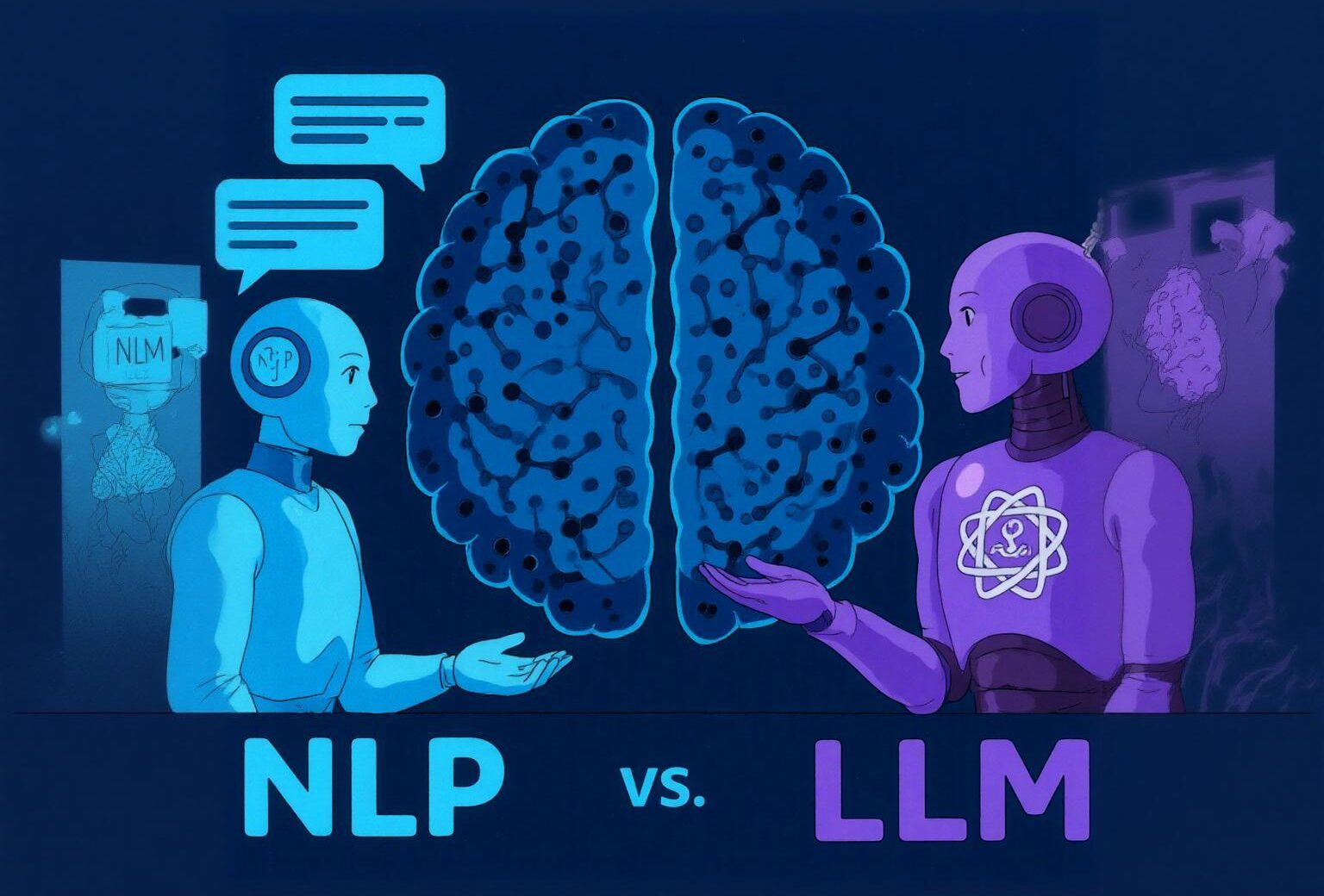
In 2019, we explored the foundations of neural networks—how layers of interconnected nodes mimic the human brain to extract patterns from data. Since then, one area where neural networks have truly transformed the landscape is Natural Language Processing (NLP). What was once rule-based and statistical has now evolved into something more fluid, contextual, and surprisingly human-like—thanks to Large Language Models (LLMs) built atop deep neural architectures. We touched upon this topic in early 2020 in our blog 🧠 Understanding the Correlation Between NLP and LLMs lets keep momentum and try understand Neural Networks empowers NLP and LLM. The NLP Challenge:…

“Before machines can understand us, they need to know where one word ends and another begins.” 🧠 Introduction: Why Tokenization Matters Natural Language Processing (NLP) has made astounding progress—from spam filters to chatbots to sophisticated language models like GPT-3. But at the heart of every NLP system lies a deceptively simple preprocessing step: tokenization. Tokenization is how raw text is broken into tokens—units that an NLP model can actually understand and process. Without tokenization, words like “can’t”, “data-driven”, or even emoji 🧠 would remain indistinguishable gibberish to machines. This blog dives into what tokenization is, the types of tokenizers, the…

🧠 What Are Neural Networks? At the heart of deep learning lies the neural network—a mathematical model inspired by the human brain’s structure. These networks are made up of layers of artificial neurons that pass information from one layer to the next. Each neuron receives input, performs a weighted computation, and passes it to the next layer through an activation function. Neural networks are particularly well-suited to learning non-linear relationships from data. They allow machines to detect intricate patterns in images, audio, or text—without explicitly being programmed for the task. A basic neural network includes an input layer, one or…