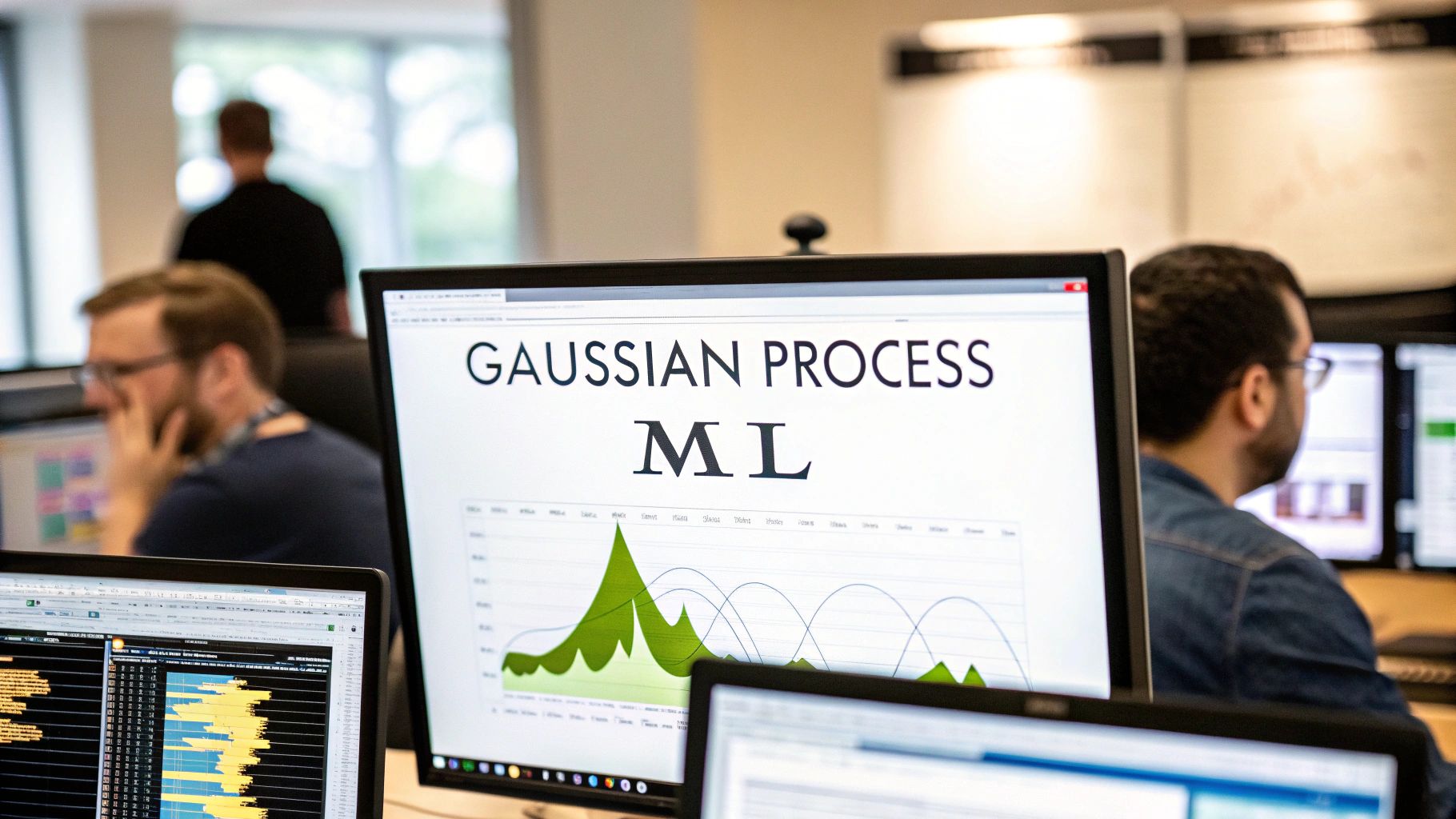
Master gaussian process machine learning with proven strategies that deliver results. Discover practical insights from ML experts on building models that work.

Thinking clearly about data, AI, and intelligent systems.
Master gaussian process machine learning with proven strategies that deliver results. Discover practical insights from ML experts on building models that work.

Compare random forest vs decision tree to understand their differences, strengths, and best use cases. Make informed machine learning choices today!

Learn how k fold cross validation enhances model reliability. Discover expert tips to implement this technique effectively and improve predictions.

Unlocking the Power of Time: Exploring Time Series Analysis This listicle provides a concise overview of eight essential time series analysis techniques for data professionals, researchers, and strategists. Understanding these methods is crucial for extracting meaningful insights from temporal data, enabling more accurate predictions and better decision-making. Learn how techniques like ARIMA, Exponential Smoothing, Prophet, LSTM networks, Spectral Analysis, State Space Models, Vector Autoregression (VAR), and XGBoost can be applied to solve real-world problems. Each technique is presented with practical use cases to demonstrate its value in various domains. 1. ARIMA (AutoRegressive Integrated Moving Average) ARIMA, short for AutoRegressive Integrated…

Unlocking the Power of Feature Selection In machine learning, choosing the right feature selection techniques is critical for model success. Too many or too few features can negatively impact performance. This listicle presents seven key feature selection techniques to improve your model's accuracy, reduce training time, and enhance interpretability. Learn how to leverage methods like Filter, Wrapper, and Embedded approaches, along with PCA, RFE, LASSO, and Mutual Information, to identify the most impactful features for your data. This knowledge empowers you to build more efficient and effective machine learning models. 1. Filter Methods (Univariate Selection) Filter methods represent a crucial…

In order to understand the criticality of Big Data Search, we need to understand the enormity of data. A terabyte is just over 1,000 gigabytes and is a label most of us are familiar with from our home computers. Scaling up from there, a petabyte is just over 1,000 terabytes. That may be far beyond the kind of data storage the average person needs, but the industry has been dealing with data in these sorts of quantities for quite some time. In fact, way back in 2008, Google was said to process around 20 petabytes of data a day (Google doesn’t release information on how much data it processes today). To put…

Image Similarity Detection with Tensorflow 2.0 I used the image classification model from TensorFlow Hub Kinshuk Dutta New York
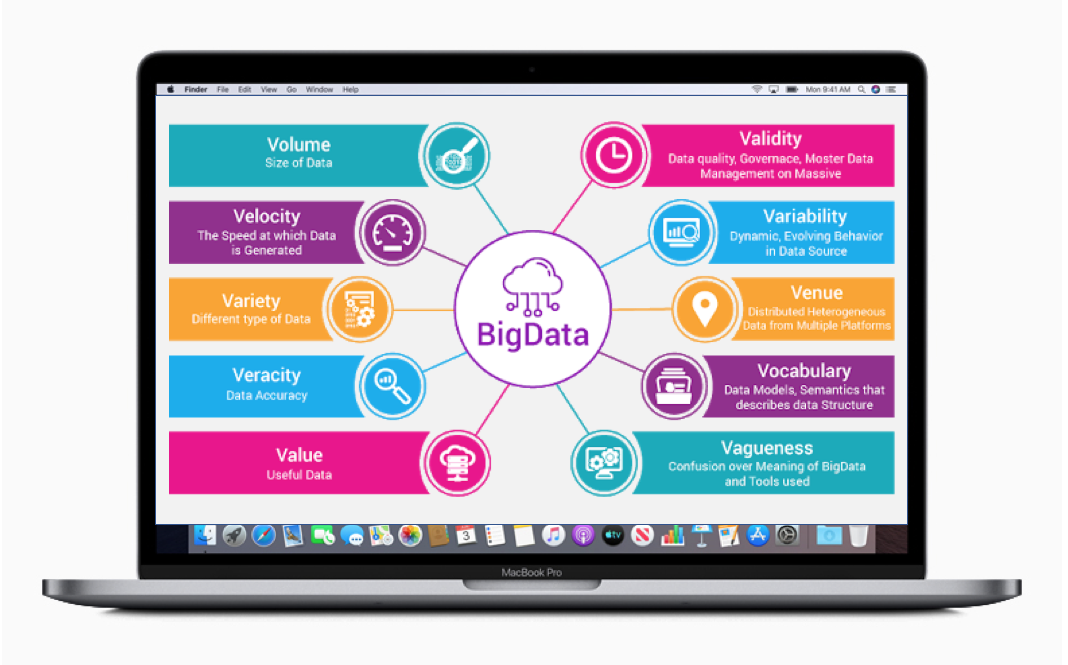
SCALA & SPARK for Managing & Analyzing BIG DATA In this blog, we’ll explore how to use Scala and Spark to manage and analyze Big Data effectively. When I first entered the Big Data world, Hadoop was the primary tool. As I discussed in my previous blogs: [What’s so BIG about Big Data (Published in 2013)] [Apache Hadoop 2.7.2 on macOS Sierra (Published in 2016)] Since then, Spark has emerged as a powerful tool, especially for applications where speed (or “Velocity”) is essential in processing data. We’ll focus on how Spark, combined with Scala, addresses the “Velocity” aspect of Big…
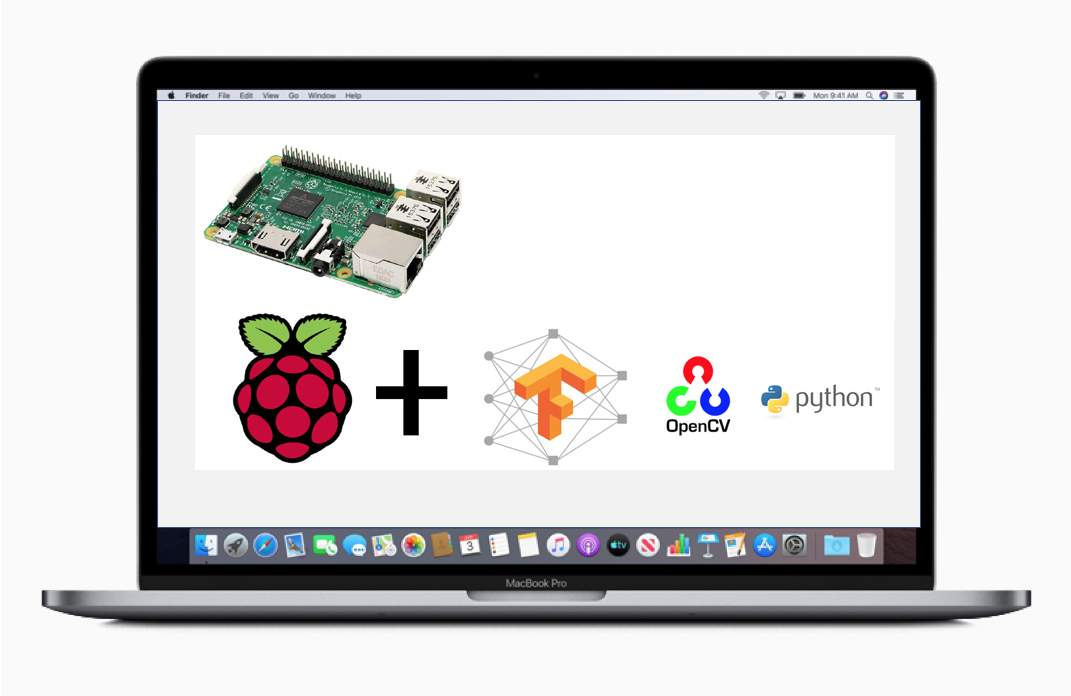
Preparing Raspberry Pi Raspberry Pi 3B+ or Raspberry Pi 4 (4 or 8 GB model). I have used 3B+ Kinshuk Dutta New York

Is This the Right Match? Exploring String Matching Algorithms and How We Compare Human beings are one of nature’s most sophisticated examples of engineering. When it comes to finding the “right match,” we possess countless tools within our own minds. These tools, or matching algorithms, are so intricately coded into our brains that we use them constantly, without even realizing their complexity—because we are overwhelmed by their simplicity. In computing, however, matching engines are not so invisible. When we talk about matching and merging in the digital world, we are quantifying and qualifying data. This data becomes actionable information through…