Learn how to fine tune LLMs with expert tips. Discover how to fine tune llm for superior AI performance and tailor models to your needs.


Thinking clearly about data, AI, and intelligent systems.
Learn how to fine tune LLMs with expert tips. Discover how to fine tune llm for superior AI performance and tailor models to your needs.
Discover the top natural language processing applications shaping 2025. Explore innovative uses of NLP and how they impact various industries. Click to learn more!
Unlock your path to machine learning mastery with expert strategies. Learn fundamentals and advanced techniques to accelerate your ML journey.
Building Robust ML Pipelines: Why MLOps Matters This listicle provides eight MLOps best practices to build robust and reliable machine learning systems. Learn how to streamline your ML workflows, improve model performance, and reduce operational overhead. Implementing these MLOps best practices is crucial for successful production ML. This article covers version control, CI/CD, feature stores, model monitoring, automated retraining, Infrastructure as Code, model serving, and collaborative workflows. By adopting these practices, you can ensure your ML projects deliver consistent value. 1. Version Control for ML Artifacts One of the most crucial MLOps best practices is implementing robust version control for…
The Foundation of Successful ML: Infrastructure Essentials Machine learning (ML) infrastructure is the essential foundation for successful AI projects. It encompasses the complete environment supporting the ML lifecycle, from initial development to final deployment and ongoing maintenance. It's a complex interplay of hardware, software, and processes, and strategic investment in this foundation is key for organizations looking to maximize their AI return on investment. Key Components of ML Infrastructure A successful machine learning infrastructure comprises several interconnected layers. Each layer is critical to the smooth and effective operation of the entire ML system. Hardware: The physical backbone of the system.…
Welcome to an exciting new chapter in exploring the world of AI, Machine Learning (ML), and Data Science! Over the years, I have posted on a variety of topics, covering everything from Python basics to the intricacies of neural networks. But now, it’s time for something bigger—a cohesive, structured series that will demystify these domains, guiding you step-by-step from foundational concepts to advanced applications. In this revamped series, I will reorganize my previously published blogs, presenting them in a logical progression so you can easily follow along, regardless of your current experience level. Alongside these, I’ll also introduce new posts…

In today’s rapidly evolving technological landscape, it’s common to hear the terms Data Science, Artificial Intelligence (AI), and Machine Learning (ML) used interchangeably. However, while these fields are interconnected, they serve different functions and demand distinct skill sets. Understanding the unique roles of each helps clarify how they work together and why they are all crucial in today’s data-driven world. What Is Artificial Intelligence and How Does It Connect to Data Science? Artificial Intelligence is a branch of computer science focused on building systems that can mimic human intelligence, allowing them to perform tasks like decision-making and problem-solving. AI-equipped systems…

The Moment the World Realized AI Could “Think” It’s just before midnight on November 30, 2022, and something extraordinary is unfolding. ChatGPT was released to the public earlier today, and like many across the world, I’ve spent hours interacting with it—testing its reasoning, pushing its boundaries, and watching it respond with an uncanny sense of logic, memory, and conversational flow. This very day made something abundantly clear: Machines can now simulate thought—with startling fluency. If you’ve followed my earlier explorations on AI vs ML vs DL or Tokenization in NLP, you’ve seen how machines learn and process language. But today’s…
Introduction: From Brains to Bytes In our previous post on AI, Machine Learning, and Deep Learning, we explored how machines can be trained to learn from data. One of the key driving forces behind this capability is a computational structure inspired by the human brain—Neural Networks. But what exactly are neural networks, and why have they become so central to modern AI? Let’s break it down in simple terms. What Is a Neural Network? A Neural Network is a series of algorithms that attempt to recognize patterns in data, similar to how our brains process information. It’s called a “network”…
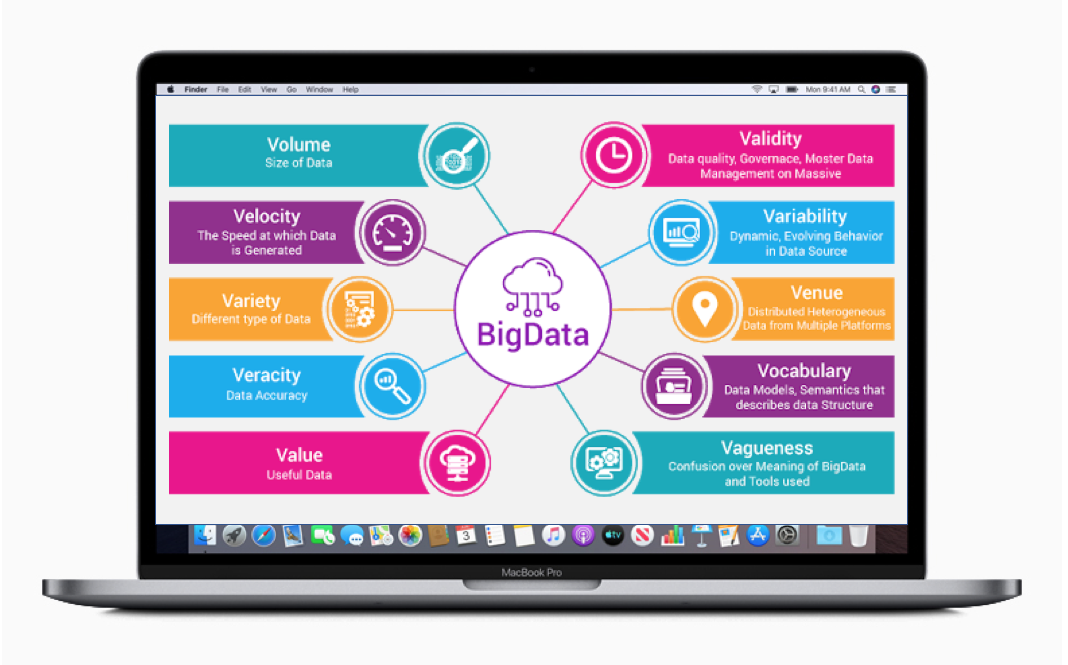
SCALA & SPARK for Managing & Analyzing BIG DATA In this blog, we’ll explore how to use Scala and Spark to manage and analyze Big Data effectively. When I first entered the Big Data world, Hadoop was the primary tool. As I discussed in my previous blogs: [What’s so BIG about Big Data (Published in 2013)] [Apache Hadoop 2.7.2 on macOS Sierra (Published in 2016)] Since then, Spark has emerged as a powerful tool, especially for applications where speed (or “Velocity”) is essential in processing data. We’ll focus on how Spark, combined with Scala, addresses the “Velocity” aspect of Big…