Unlock your path to machine learning mastery with expert strategies. Learn fundamentals and advanced techniques to accelerate your ML journey.


Thinking clearly about data, AI, and intelligent systems.
Unlock your path to machine learning mastery with expert strategies. Learn fundamentals and advanced techniques to accelerate your ML journey.

Explore 7 interesting spurious correlation examples that show correlation doesn't mean causation. Learn key data analysis insights from these cases.
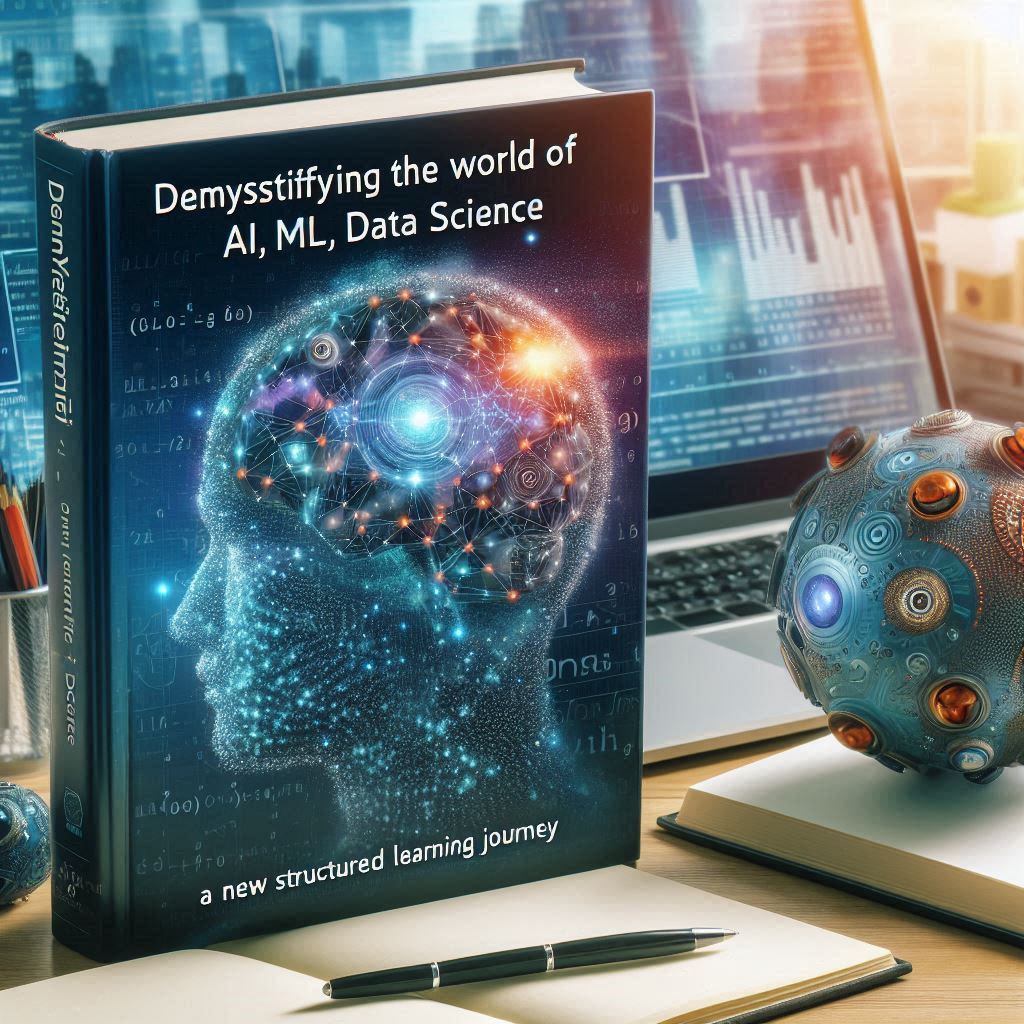
Welcome to an exciting new chapter in exploring the world of AI, Machine Learning (ML), and Data Science! Over the years, I have posted on a variety of topics, covering everything from Python basics to the intricacies of neural networks. But now, it’s time for something bigger—a cohesive, structured series that will demystify these domains, guiding you step-by-step from foundational concepts to advanced applications. In this revamped series, I will reorganize my previously published blogs, presenting them in a logical progression so you can easily follow along, regardless of your current experience level. Alongside these, I’ll also introduce new posts…

In today’s rapidly evolving technological landscape, it’s common to hear the terms Data Science, Artificial Intelligence (AI), and Machine Learning (ML) used interchangeably. However, while these fields are interconnected, they serve different functions and demand distinct skill sets. Understanding the unique roles of each helps clarify how they work together and why they are all crucial in today’s data-driven world. What Is Artificial Intelligence and How Does It Connect to Data Science? Artificial Intelligence is a branch of computer science focused on building systems that can mimic human intelligence, allowing them to perform tasks like decision-making and problem-solving. AI-equipped systems…

What is Data Science? Data science is an interdisciplinary field that uses scientific methods, processes, algorithms, and systems to extract knowledge and insights from structured and unstructured data. Data science is related to data mining, machine learning, and big data. Data science is a “concept to unify statistics, data analysis, and their related methods” to “understand and analyze actual phenomena” with data. It uses techniques and theories drawn from many fields within the context of mathematics, statistics, computer science, domain knowledge, and information science. (Wikipedia: Data science) R or Python? Data Scientist R vs Python Why use R for Data…
Elasticsearch is a search engine based on the Lucene library. It provides a distributed, multitenant-capable full-text search engine with an HTTP web interface and schema-free JSON documents. Elasticsearch is developed in Java. Following an open-core business model, parts of the software are licensed under various open-source licenses (mostly the Apache License),[2] while other parts fall under the proprietary (source-available) Elastic License. Official clients are available in Java, .NET (C#), PHP, Python, Apache Groovy, Ruby and many other languages. According to the DB-Engines ranking, Elasticsearch is the most popular enterprise search engine followed by Apache Solr, also based on Lucene. Original author Shay Banon talking about Elasticsearch at Berlin Buzzwords 2010 Initial release 8 February 2010 Written in Java License Various (open-core model), e.g. Apache License 2.0(partially; open source), Elastic License (proprietary; source-available) Website…
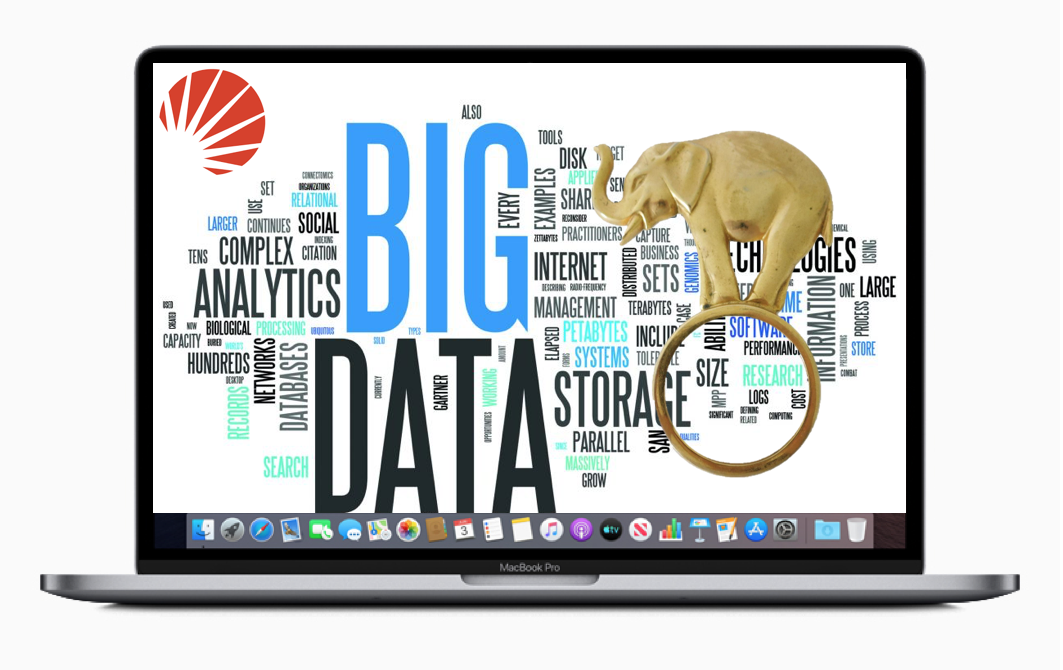
In order to understand the criticality of Big Data Search, we need to understand the enormity of data. A terabyte is just over 1,000 gigabytes and is a label most of us are familiar with from our home computers. Scaling up from there, a petabyte is just over 1,000 terabytes. That may be far beyond the kind of data storage the average person needs, but the industry has been dealing with data in these sorts of quantities for quite some time. In fact, way back in 2008, Google was said to process around 20 petabytes of data a day (Google doesn’t release information on how much data it processes today). To put…
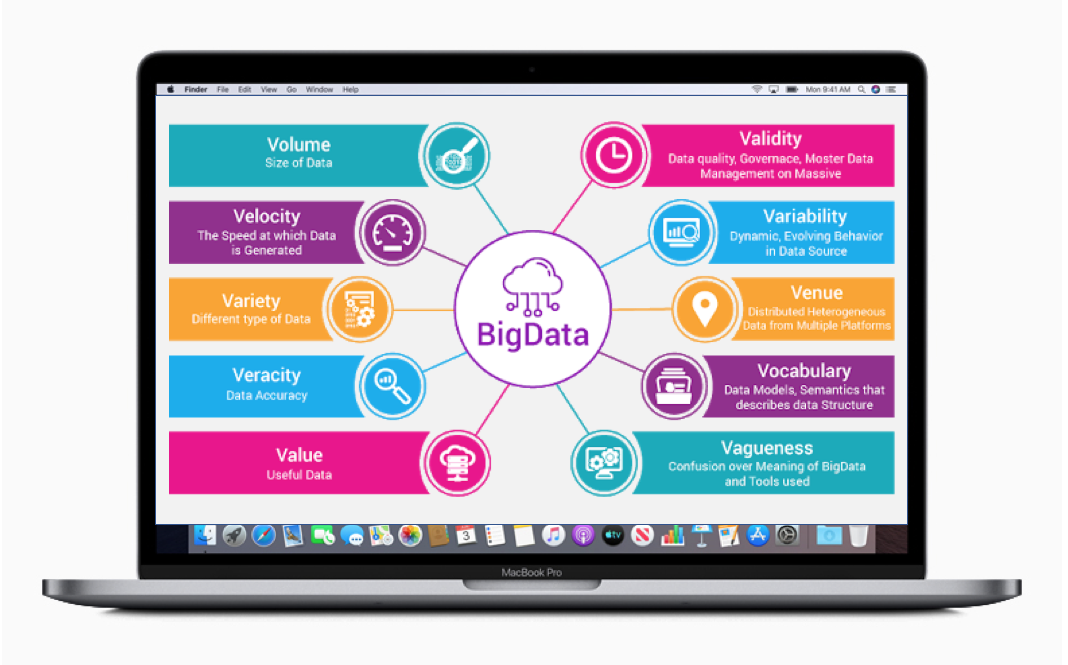
SCALA & SPARK for Managing & Analyzing BIG DATA In this blog, we’ll explore how to use Scala and Spark to manage and analyze Big Data effectively. When I first entered the Big Data world, Hadoop was the primary tool. As I discussed in my previous blogs: [What’s so BIG about Big Data (Published in 2013)] [Apache Hadoop 2.7.2 on macOS Sierra (Published in 2016)] Since then, Spark has emerged as a powerful tool, especially for applications where speed (or “Velocity”) is essential in processing data. We’ll focus on how Spark, combined with Scala, addresses the “Velocity” aspect of Big…

🧠 What Are Neural Networks? At the heart of deep learning lies the neural network—a mathematical model inspired by the human brain’s structure. These networks are made up of layers of artificial neurons that pass information from one layer to the next. Each neuron receives input, performs a weighted computation, and passes it to the next layer through an activation function. Neural networks are particularly well-suited to learning non-linear relationships from data. They allow machines to detect intricate patterns in images, audio, or text—without explicitly being programmed for the task. A basic neural network includes an input layer, one or…

Getting Started with Machine Learning (ML) Machine learning projects typically follow a series of steps: data collection, data preprocessing, model selection, training, and evaluation. Here’s a breakdown of essential concepts and project ideas to help you get started. 1. Data Collection and Preprocessing Data is the foundation of any ML project. Collecting relevant, high-quality data ensures models have the information needed to identify patterns. Preprocessing steps—such as cleaning, normalization, and handling missing values—prepare raw data for analysis. Project Example: Predicting House Prices Using the famous Boston housing dataset, you can start by cleaning data and then normalizing it to improve…