Learn to build a robust data strategy framework. This guide provides actionable steps for leveraging data, governance, and AI for real business growth.


Thinking clearly about data, AI, and intelligent systems.
Statista 2026 raporuna göre, dünya çapındaki kumar kullanıcılarının %72’si 18 ile 44 yaş aralığındadır; bu grup bettilt giriş kullanıcılarının büyük bölümünü oluşturur.
Learn to build a robust data strategy framework. This guide provides actionable steps for leveraging data, governance, and AI for real business growth.

Learn how to create a solid sample data governance policy that ensures data quality, security, and compliance. Find essential tips for 2025.

Unleashing the Power of Data: Why Governance Matters in 2025 In 2025, robust data governance is critical for organizations handling large, complex datasets. This listicle provides seven data governance examples to help you build a practical and adaptable data strategy. Learn how Master Data Management, Data Quality frameworks, and other key initiatives can ensure data quality, security, and compliance. Explore these practical data governance examples to unlock the full potential of your data assets. 1. Master Data Management (MDM) Master Data Management (MDM) is a core component of data governance, providing a comprehensive methodology for managing an organization's most critical…
Navigating the Data Deluge: Essential Practices for 2025 Effective data management is crucial for success in data-intensive fields. This listicle presents eight best practices for data management in 2025, offering actionable insights to help you maximize the value of your data assets. Learn how to implement a robust data governance framework, manage metadata effectively, master data quality, ensure data security and privacy, and navigate the data lifecycle. We’ll also cover data integration, interoperability, and the implementation of DataOps. Applying these best practices for data management empowers you to extract valuable insights and drive informed decision-making. 1. Data Governance Framework Implementation…
Introduction Back in 2013, I began blogging about Big Data, diving into the ways massive data volumes and new technologies were transforming industries. Over the years, I’ve explored various aspects of data management, from data storage to processing frameworks, as these technologies have evolved. Today, the conversation has shifted towards decentralized data architectures, with Data Fabric and Data Mesh emerging as powerful approaches for enabling agility, scalability, and data-driven insights. In this blog, I’ll discuss the core concepts of Data Fabric and Data Mesh, their key differences, and their roles in modern applications. I’ll also share a bit of my…

Kinshuk Dutta New York


Master Data Management (MDM) Solutions for the Finance Industry: A Pathway to Operational Excellence In today’s financial landscape, data has become the cornerstone of decision-making, compliance, and operational efficiency. For financial institutions, managing data effectively is not just a competitive advantage—it’s essential for survival in a highly regulated and data-driven environment. Master Data Management (MDM) offers a structured approach to consolidating and governing critical data, ensuring that it remains accurate, consistent, and readily available across the organization. MDM solutions allow financial institutions to build a single source of truth for their most important data assets, such as customer information, legal…
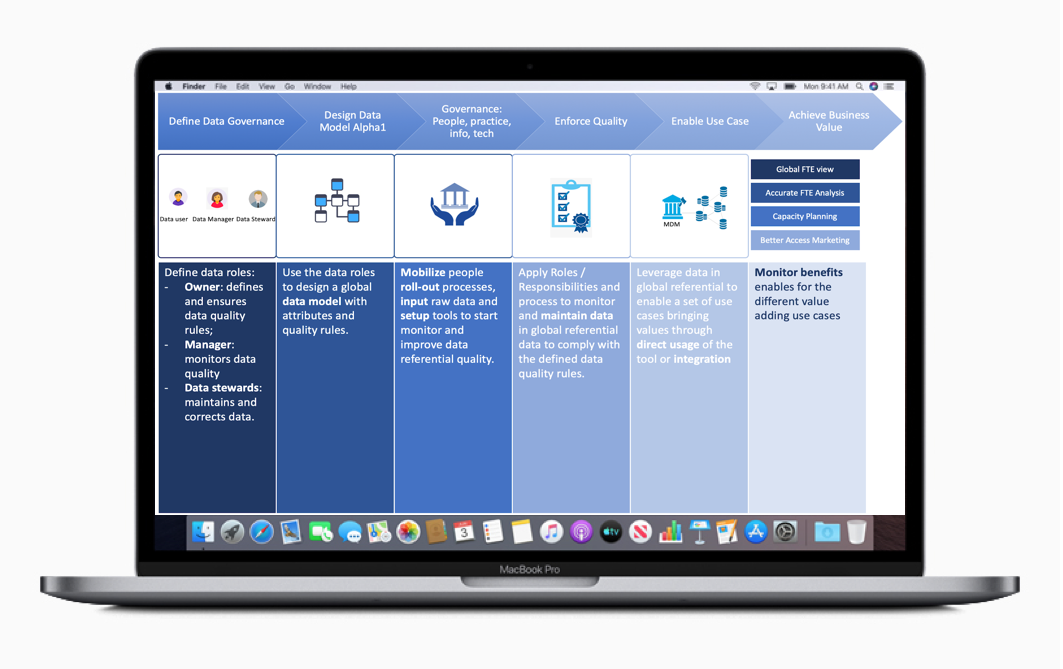
Choose- What’s right for you… Not what you are lured with!! We are often confused by our needs. Sometimes we do not have options and have to trust what we get as the best and some other times we are showered with so many offers that we are not sure whether what we are choosing is actually what we want. Brand names, attractive features, extravagant style often blinds our judgment and we end up with a rather overpriced superficially complex, and high-maintenance seeking product. Typical MDM Project – Business Value realization The goal of any MDM implementation…

What are the different classification of Data? Data can be widely classified as: Transactional Data Master Data Reference Data Meta Data Analytical Data What is Master Data? Master data is typically persistent, non-transactional data utilized by multiple systems that define the primary business entities. Master Data may include data about customers, products, employees, inventory, suppliers, and sites. What is Data Profiling? Data profiling is the process of examining the data available from an existing information source and collecting statistics or informative summaries about that data. They are widely categorized as Structure discovery Content Discovery & Relationship Discovery In order to…