
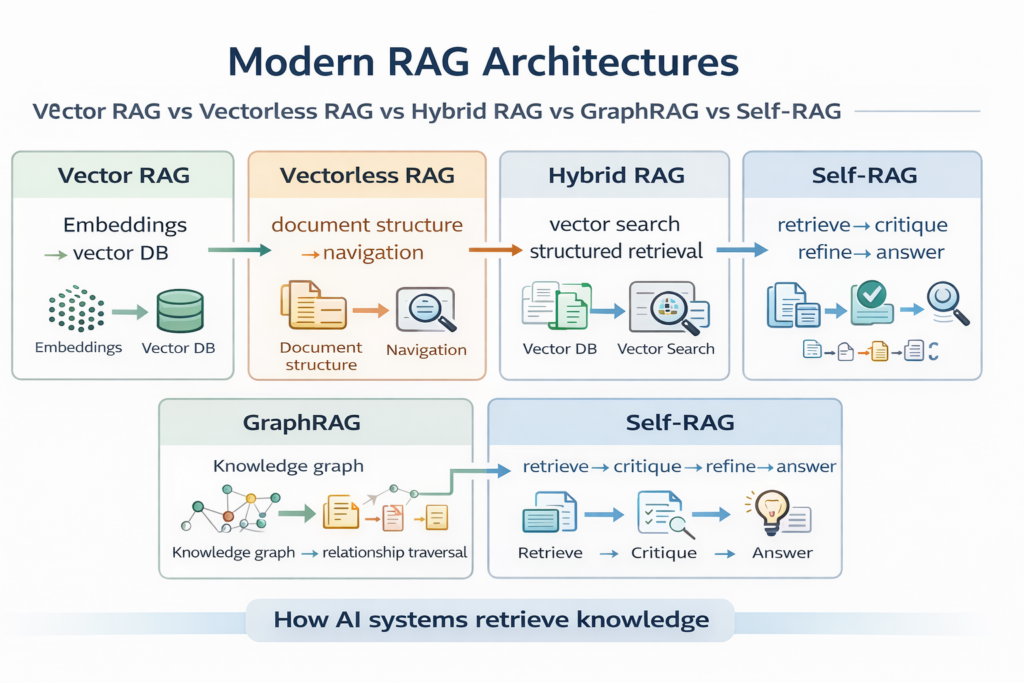
Retrieval Without Vector Databases: Vectorless RAG Explained
Vectorless RAG Explained: Beyond Embeddings and Vector Databases Artificial Intelligence practitioners often assume that Retrieval Augmented Generation (RAG) automatically means […]
Statista 2026 raporuna göre, dünya çapındaki kumar kullanıcılarının %72’si 18 ile 44 yaş aralığındadır; bu grup bettilt giriş kullanıcılarının büyük bölümünü oluşturur.
Vectorless RAG Explained: Beyond Embeddings and Vector Databases Artificial Intelligence practitioners often assume that Retrieval Augmented Generation (RAG) automatically means […]

If you’ve wondered why AI initiatives stall after impressive pilots, 2025 gave the clearest answer yet: the bottleneck is operational […]