• MDM

    EBX Master Data Management – Sample Job Interview Questions

    What are the different classification of Data? Data can be widely classified as: Transactional Data Master Data Reference Data Meta Data Analytical Data What is Master Data? Master data is typically persistent, non-transactional data utilized by multiple systems that define the primary business entities. Master Data may include data about customers, products, employees, inventory, suppliers, and sites. What is Data Profiling? Data profiling is the process of examining the data available from an existing information source and collecting statistics or informative summaries about that data. They are widely categorized as Structure discovery Content Discovery & Relationship Discovery In order to…


  • MDM

    Master Data Management (CDI/IR/PIM)

    What is Master Data Management It’s the process of managing “Master Data”. Master Data Management is a technology-enabled discipline in which business and Information Technology work together to ensure the uniformity, accuracy, stewardship, semantic consistency, and accountability of the enterprise’s official shared master data assets. Wikipedia What is Master Data Enterprize data can be broadly categorized as : Transactional data are the elements that support the on-going operations of an organization and are included in the application systems that automate key business processes. This can include areas such as sales, service, order management, manufacturing, purchasing, billing, accounts receivable, and accounts…

  • Big Data - OTF

    Iceberg Basics

    In my recent post I tried explaining how different data collection mechanisms are available and how due to modern day requirement, modern data lakes were formed. Iceberg is one such solution that came out really strong. What is Apache ICEBERG? Apache Iceberg is an open table format for huge analytic datasets. Iceberg adds tables to Trino and Spark that use a high-performance format that works just like a SQL table. With special emphasis on User Experience Reliability and Performance & Open Standards What makes it special is its unique table design for big data. This is explained brilliantly and covered well…

  • Analytics & Reporting

    ♾️SUPERSET Basics

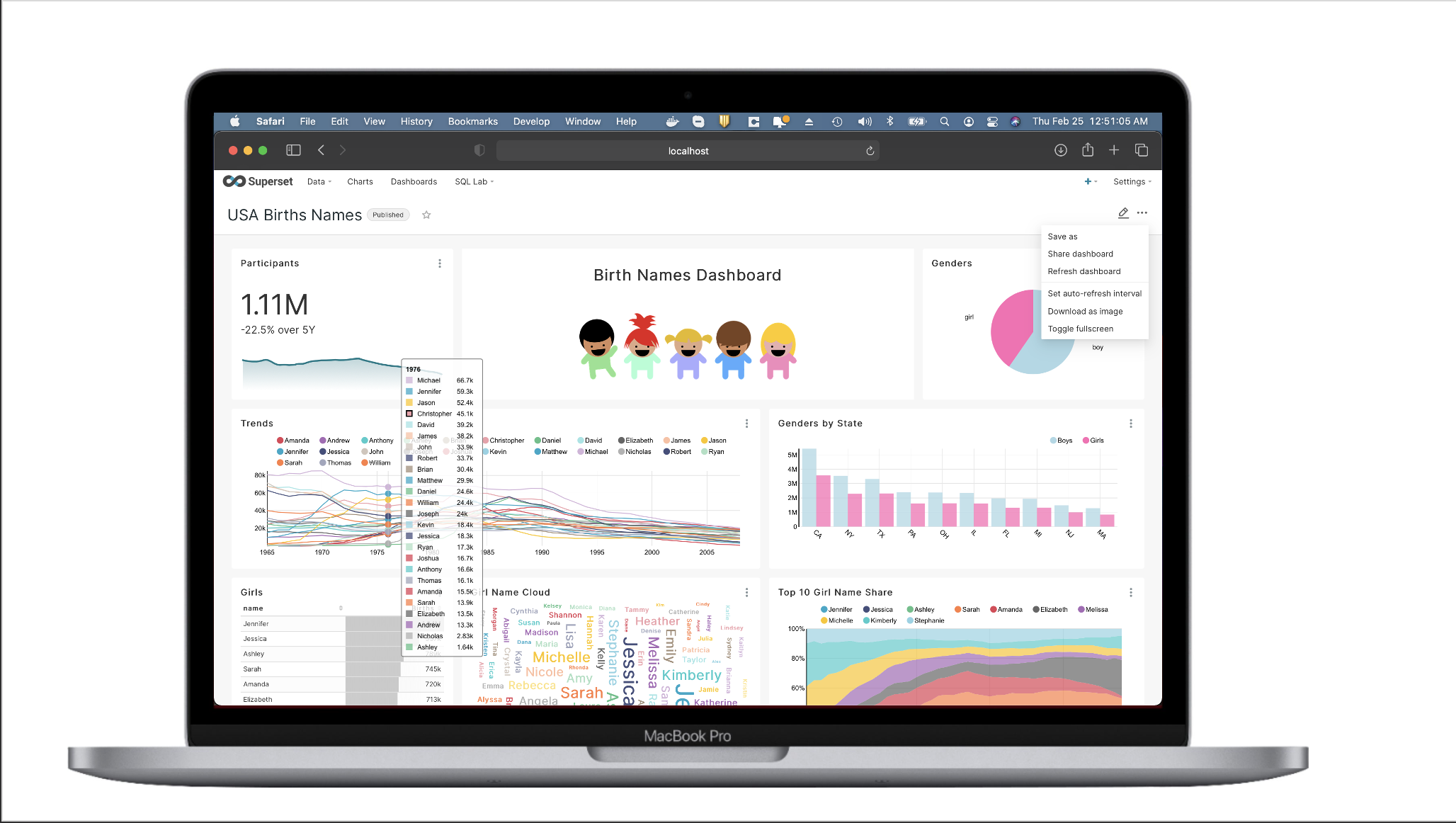
    What is Apache Superset? Apache Superset is a modern, enterprise-ready business intelligence web application. It is fast, lightweight, intuitive, and loaded with options that make it easy for users of all skill sets to explore and visualize their data, from simple pie charts to highly detailed deck.gl geospatial charts. Why use Apache Superset? Apache Superset Open Source BI: almost the alternative to Tableau  by  Susana Santos  2018-09-17 In a recent blog posted on Jan 19. Dropbox explained why they selected Superset. This matrix from the same blog explains it in a nutshell. The entire blog is accessible over here. Installing Superset…

  • Data Virtualization - Data Integration - Integration - Enterprise Application Integration - Big Data

    PRESTO / Trino Basics

    Introduction: My Journey into Presto My interest in Presto was sparked in early 2021 after an enriching conversation with Brian Luisi, PreSales Manager at Starburst. His insights into distributed SQL query engines opened my eyes to the unique capabilities and performance advantages of Presto. Eager to dive deeper, I joined the Presto community on Slack to keep up with developments and collaborate with like-minded professionals. This blog series is an extension of that journey, aiming to demystify Presto and share my learnings with others curious about distributed analytics solutions. What is PRESTO Presto is a high performance, distributed SQL query…

  • Big Data - Data Storage - OTF - Data Lake

    Modern Data Lake

    Data Lake The modern enterprise runs on data. However storing the same has always been challenging, expensive and it results in data silos. A data lake consists of a cost-effective and scalable storage system along with one or more compute engines. Data Lakes are consolidated, centralized storage areas for raw, unstructured, semi-structured, and structured data, taken from multiple sources and lacking a predefined schema. Data Lakes have been created to save data that “may have value.” It supports a broad range of essential functions from traditional decision support to business analytics to data science. The value of data and the insights…

  • Data Storage - Data Lake

    Data Lake vs. Data Lakehouse: Evolution and Key Differences

    In recent years, data storage has undergone significant transformation. While data lakes have become central to modern data architecture, a new contender has emerged: the data lakehouse. With its blend of traditional data lake flexibility and data warehouse reliability, the lakehouse model aims to address some of the challenges that data lakes face today, including data integrity and workload diversity. This blog explores the evolution from data lakes to data lakehouses and highlights key differences that are redefining how organizations manage their data. The Role of Data Lakes in Modern Data Management A data lake is a centralized repository designed…

  • Big Data

    Big Data Search

    In order to understand the criticality of Big Data Search, we need to understand the enormity of data. A terabyte is just over 1,000 gigabytes and is a label most of us are familiar with from our home computers. Scaling up from there, a petabyte is just over 1,000 terabytes. That may be far beyond the kind of data storage the average person needs, but the industry has been dealing with data in these sorts of quantities for quite some time. In fact, way back in 2008, Google was said to process around 20 petabytes of data a day (Google doesn’t release information on how much data it processes today). To put…

  • Cloud Computing

    Hosting a WordPress Application on Local Server

    This blog is written in response to a query from a fellow blogger. Who wanted to know how do I manage and maintain my personal blog. I have been blogging and using blogger.com to host my blog site for almost a decade now. My blogs are my personal notes or curation of materials that I use. His question provoked me to think about hosting my own website on my spare MacBook pro. With that in mind, I started some research activities. This blog is my steps of activities and the final result.     Technology Stack Selection I metaphorically selected…

  • MDM

    EBX5 Blog Post 2: Workshops and Activities for Successful Implementation

    The foundation of a successful EBX5 project is a well-structured series of workshops and activities that align business and IT teams with the project goals. The first critical step in this process is the Project Kickoff, where the objectives, roles, and key deliverables are clearly defined. 1. Project Kickoff: Setting the Stage for Success The project kickoff is where both business and IT teams come together to define the project’s scope, set expectations, and ensure alignment on key goals. Here are the major components of the kickoff phase: Project Scope Reminder (Business and IT Goals): During the kickoff, it’s essential…