Simple Problem Statement Managing the following Master Data domains: PARTY Domain Patients Health care providers (HCP) Doctors (which is a subset of HCP) LOCATION Domain Health care organizations (HCO) Hospitals (which is a subset of HCO) PRODUCT Domain Drugs @ NDC Medical Devices Managing the following Reference Data domains: NUCC taxonomy NPI number Managing the following Metadata domains: Business metadata Technical metadata Managing Compliances! My Setup Hardware Server: Macbook Pro Software MDM Product: Orchestra Network’s EBX5 Database Server: Postgres SQL Detailed Capabilities & Use Cases Consolidation Use Case Match Engine Vocabulary Data Quality Check the data quality of the source…

-
-
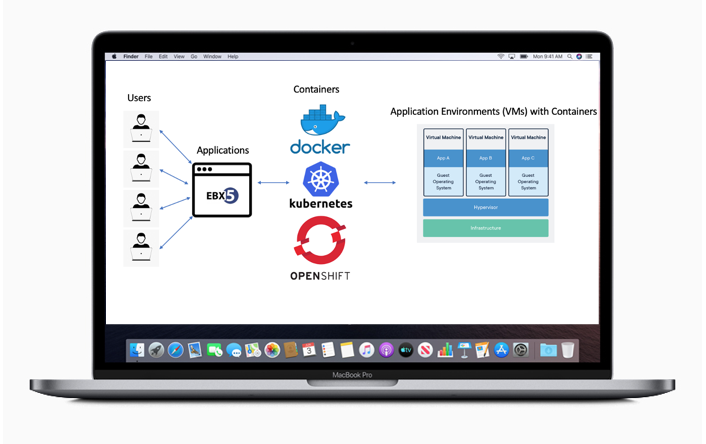
Chapter 1: Introduction In the recent past we have experienced many customers wants to containerize the deployment process. Container deployment is a method for quickly building and releasing complex applications. Docker container deployment is a popular technology that gives developers the ability to construct application environments with speed at scale. What is Container Deployment? Container deployment is the action of putting containers to use. The deployment of containers uses management software that simplifies the launch and updates of applications. Container deployment provides fast access to environments and speeds up development because secure containers can be quickly downloaded and put to use.…
-
EBX5: Modern data management Model-driven software: Can absorb any data model and generate data management applications on the fly (what you model is what you get) All data management capabilities in one software (no OEM or 3rd party components) https://www.orchestranetworks.com/post/orchestra-networks-ebx5-first-in-master-data-management-technology-for-5th-consecutive-year Kinshuk Dutta Lisboa, Portugal.
-
Christophe Barriolade , CEO – Orchestra Networks, & Conrad Chuang, Sr. Product Marketing Director presented in the Gartner MDM Summit on March 16-18, 2016 at Gaylord Texan Hotel & Convention Center in Grapevine, Texas A New Way to Manage, Govern, and Share Your Data Assets using EBX5!! A New Way to Manage, Govern, and Share Your Data Assets As the world becomes increasingly data-driven, organizations face immense pressure to manage, govern, and share their data assets effectively. Data is no longer just a byproduct of business processes; it has evolved into a critical asset that drives decision-making, innovation, and competitive…
-
Data quality is critical to the success of any master data management (MDM) initiative. Ensuring that the data you rely on is accurate, consistent, and trustworthy is essential for making informed business decisions. EBX5 provides powerful data quality management and governance features that help organizations maintain high-quality data while ensuring that governance policies are followed throughout the data’s lifecycle. In this post, we’ll explore how EBX5 enables organizations to manage data quality effectively and implement strong governance practices. 1. Data Quality Management in EBX5 EBX5 offers a comprehensive set of tools to help organizations assess, monitor, and improve the quality…
-
One of the key strengths of EBX5 is its ability to streamline data processes through workflow automation and seamless data synchronization across systems. By automating workflows for data onboarding, approvals, and change requests, and synchronizing data in real-time or via batch processes, EBX5 ensures that master data management is both efficient and reliable. In this post, we’ll explore how EBX5 enables workflow automation and data synchronization, helping organizations optimize their data management processes. 1. Workflow Automation in EBX5 Workflows are an essential component of any data management process, allowing organizations to define and automate the steps required to onboard, enrich,…
-
Data modeling and security are at the heart of any successful master data management project, and EBX5 provides powerful capabilities to address these needs. In this post, we’ll explore how EBX5 supports organizations in building robust data models and securing their data, ensuring that data governance, accuracy, and compliance are maintained. 1. Data Modeling in EBX5 EBX5’s data modeling capabilities are designed to meet the needs of both business and IT teams, enabling collaboration to create a data model that reflects real-world business requirements while adhering to technical standards. Here’s how EBX5 supports effective data modeling: Flexible Data Structures: EBX5…
-
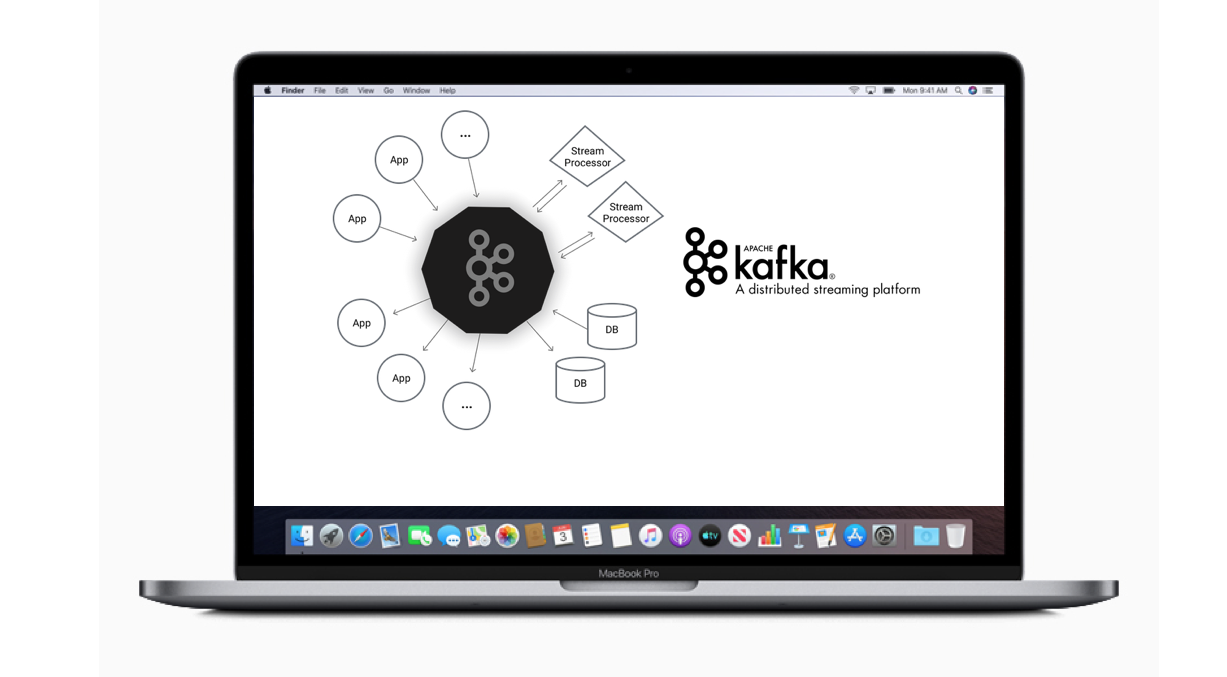
Apache Kafka has transformed the world of data streaming and event-driven architectures. In this blog, we’ll dive into Kafka’s fundamentals and build a step-by-step sample project to demonstrate its capabilities. This project will showcase Kafka’s distributed nature and streaming potential, giving you a practical approach to setting up, running, and testing a Kafka cluster on macOS. Table of Contents Kafka Basics What is Kafka Kafka System Architecture Kafka API Why Kafka Installing Kafka on macOS Basic Operations Starting Kafka and ZooKeeper Creating a Topic Sample Project: Kafka Real-Time Data Pipeline Project Structure Creating Producers and Consumers Testing the Kafka Pipeline…
-
Is This the Right Match? Exploring String Matching Algorithms and How We Compare Human beings are one of nature’s most sophisticated examples of engineering. When it comes to finding the “right match,” we possess countless tools within our own minds. These tools, or matching algorithms, are so intricately coded into our brains that we use them constantly, without even realizing their complexity—because we are overwhelmed by their simplicity. In computing, however, matching engines are not so invisible. When we talk about matching and merging in the digital world, we are quantifying and qualifying data. This data becomes actionable information through…
-
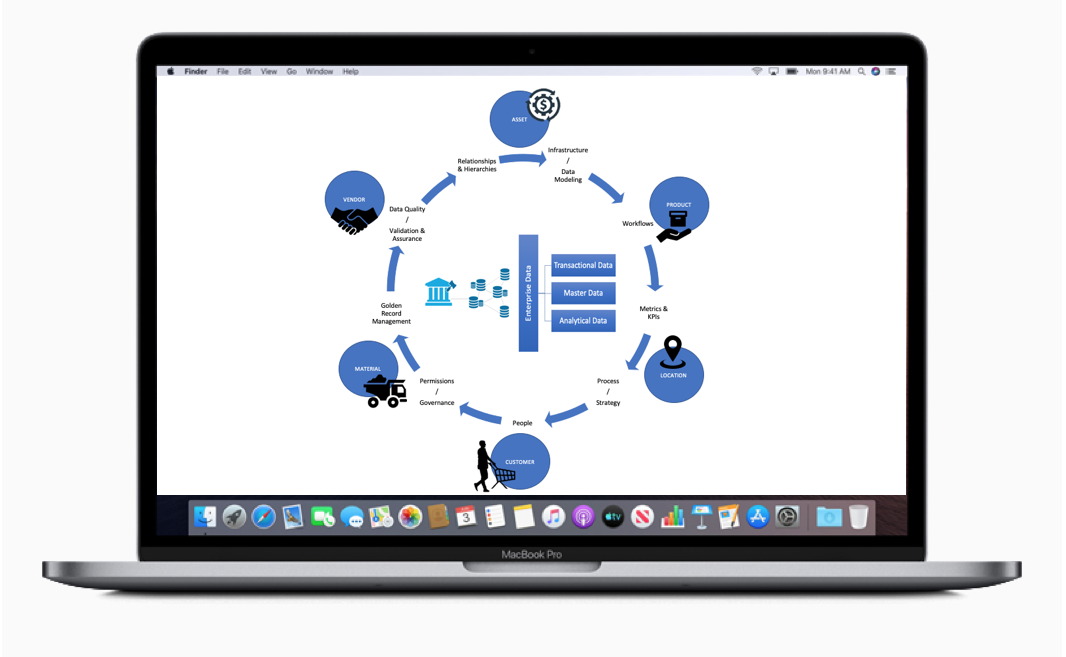
[Multi – Domain] Master Data management My blog started with the concept of MDM explained in Master Data Management (CDI/IR/PIM) published in 2008. I will try to redefine some of the terms from the previous MDM blog. Master Data: It is the information that may include data about customers, products, employees, materials, suppliers, etc. often it is non-transactional in nature. In the context of MDM, master data can support transactional processes and operations also. Business-wise the analytics/reporting of an enterprise greatly depends on its master data. Master data is often used by several functional groups and stored in different data…