In today’s rapidly evolving technological landscape, it’s common to hear the terms Data Science, Artificial Intelligence (AI), and Machine Learning (ML) used interchangeably. However, while these fields are interconnected, they serve different functions and demand distinct skill sets. Understanding the unique roles of each helps clarify how they work together and why they are all crucial in today’s data-driven world. What Is Artificial Intelligence and How Does It Connect to Data Science? Artificial Intelligence is a branch of computer science focused on building systems that can mimic human intelligence, allowing them to perform tasks like decision-making and problem-solving. AI-equipped systems…

-
-
🔍 Introduction: Beyond Thought Simulation In our previous blog on Thought Generation in AI and NLP, we explored how modern AI systems can simulate reasoning, explanation, and creativity. At the heart of this capability lies a game-changing innovation in deep learning: the Transformer architecture. Originally introduced in the groundbreaking paper Attention is All You Need by Vaswani et al. in 2017, transformers have become the standard building block for nearly every large language model (LLM)—including GPT, BERT, PaLM, and Claude. This blog takes a hardcore technical deep dive into the full transformer architecture diagram you see above. Whether you’re a…
-
The Moment the World Realized AI Could “Think” It’s just before midnight on November 30, 2022, and something extraordinary is unfolding. ChatGPT was released to the public earlier today, and like many across the world, I’ve spent hours interacting with it—testing its reasoning, pushing its boundaries, and watching it respond with an uncanny sense of logic, memory, and conversational flow. This very day made something abundantly clear: Machines can now simulate thought—with startling fluency. If you’ve followed my earlier explorations on AI vs ML vs DL or Tokenization in NLP, you’ve seen how machines learn and process language. But today’s…
-
Introduction Back in 2013, I began blogging about Big Data, diving into the ways massive data volumes and new technologies were transforming industries. Over the years, I’ve explored various aspects of data management, from data storage to processing frameworks, as these technologies have evolved. Today, the conversation has shifted towards decentralized data architectures, with Data Fabric and Data Mesh emerging as powerful approaches for enabling agility, scalability, and data-driven insights. In this blog, I’ll discuss the core concepts of Data Fabric and Data Mesh, their key differences, and their roles in modern applications. I’ll also share a bit of my…
-
In 2019, we explored the foundations of neural networks—how layers of interconnected nodes mimic the human brain to extract patterns from data. Since then, one area where neural networks have truly transformed the landscape is Natural Language Processing (NLP). What was once rule-based and statistical has now evolved into something more fluid, contextual, and surprisingly human-like—thanks to Large Language Models (LLMs) built atop deep neural architectures. We touched upon this topic in early 2020 in our blog 🧠 Understanding the Correlation Between NLP and LLMs lets keep momentum and try understand Neural Networks empowers NLP and LLM. The NLP Challenge:…
-
“Before machines can understand us, they need to know where one word ends and another begins.” 🧠 Introduction: Why Tokenization Matters Natural Language Processing (NLP) has made astounding progress—from spam filters to chatbots to sophisticated language models like GPT-3. But at the heart of every NLP system lies a deceptively simple preprocessing step: tokenization. Tokenization is how raw text is broken into tokens—units that an NLP model can actually understand and process. Without tokenization, words like “can’t”, “data-driven”, or even emoji 🧠 would remain indistinguishable gibberish to machines. This blog dives into what tokenization is, the types of tokenizers, the…
-
What is Data Science? Data science is an interdisciplinary field that uses scientific methods, processes, algorithms, and systems to extract knowledge and insights from structured and unstructured data. Data science is related to data mining, machine learning, and big data. Data science is a “concept to unify statistics, data analysis, and their related methods” to “understand and analyze actual phenomena” with data. It uses techniques and theories drawn from many fields within the context of mathematics, statistics, computer science, domain knowledge, and information science. (Wikipedia: Data science) R or Python? Data Scientist R vs Python Why use R for Data…
-
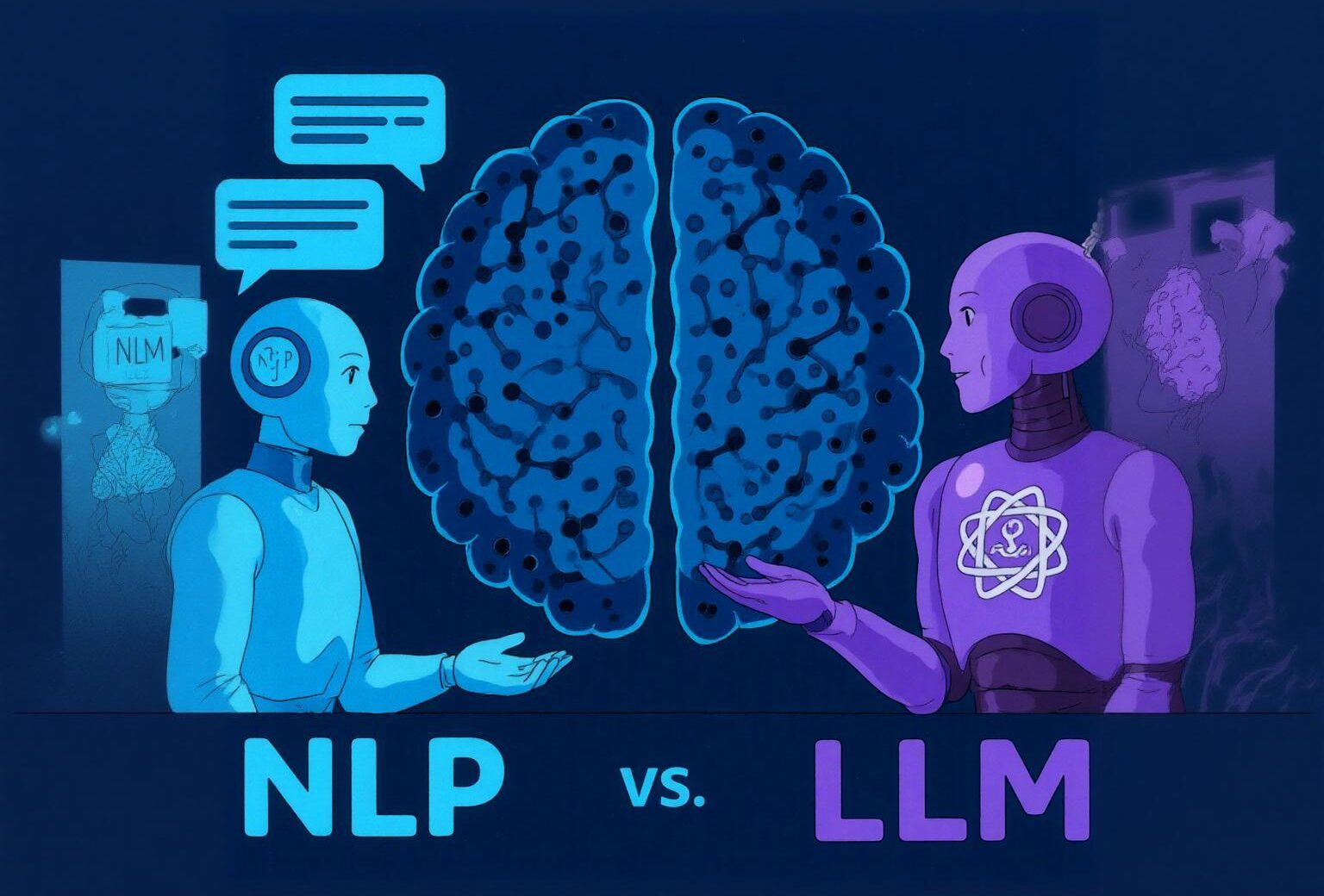
Introduction Natural Language Processing (NLP) is a field of artificial intelligence that focuses on the interaction between computers and human language. In recent years, a significant advancement in NLP has been the development of Large Language Models (LLMs), which have dramatically improved the ability of machines to understand and generate human-like text. This blog aims to provide a foundational understanding of NLP and LLMs, their interconnection, and the transformative impact they have on various applications. What Is Natural Language Processing (NLP)? NLP is a subfield of AI that enables machines to read, interpret, and generate human language. It encompasses a…
-
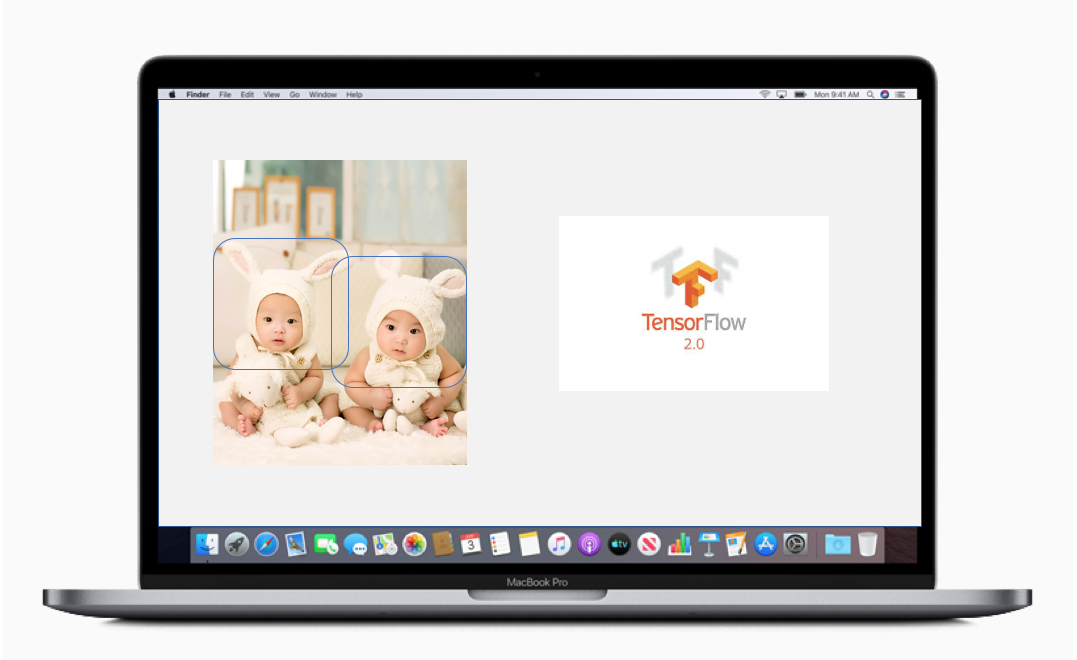
Image Similarity Detection with Tensorflow 2.0 I used the image classification model from TensorFlow Hub Kinshuk Dutta New York
-
Introduction: From Brains to Bytes In our previous post on AI, Machine Learning, and Deep Learning, we explored how machines can be trained to learn from data. One of the key driving forces behind this capability is a computational structure inspired by the human brain—Neural Networks. But what exactly are neural networks, and why have they become so central to modern AI? Let’s break it down in simple terms. What Is a Neural Network? A Neural Network is a series of algorithms that attempt to recognize patterns in data, similar to how our brains process information. It’s called a “network”…