
When a data pipeline breaks, it's more than a technical glitch; it's a direct threat to business operations. Decisions get made on stale or incomplete information, eroding trust and leading to costly errors. This makes robust data pipeline monitoring an operational necessity, not just a technical best practice. As we've explored in our previous articles on building automated data pipelines, maintaining data integrity from source to destination is critical for any successful data strategy.
This guide provides actionable insights into the top platforms designed to safeguard your data's journey. We will move beyond generic descriptions to deliver a comprehensive resource list focused on practical application. You'll find a detailed analysis of 12 leading data pipeline monitoring tools, from Integrate.io to New Relic, each with a focus on real-world use cases. For example, we'll show how a tool like Monte Carlo can prevent a marketing team from using corrupted attribution data by detecting schema changes in real-time, providing an immediate, actionable alert to investigate the source API change.
Each review is structured to help you make an informed choice, complete with screenshots, direct links, and an honest assessment of limitations. Our goal is to equip you with the knowledge to select the best platform for your specific needs, transforming monitoring from a reactive chore into a proactive, value-driving activity.
1. Integrate.io
Integrate.io is a cloud-based, low-code data integration platform designed to simplify the creation and management of data pipelines for both technical and non-technical users. It excels by merging powerful ETL, ELT, Reverse ETL, and Change Data Capture (CDC) capabilities with an intuitive, drag-and-drop interface, making it a standout choice for teams that need to move fast without deep coding expertise. Its strength lies in providing robust, real-time monitoring directly within the pipeline creation environment.
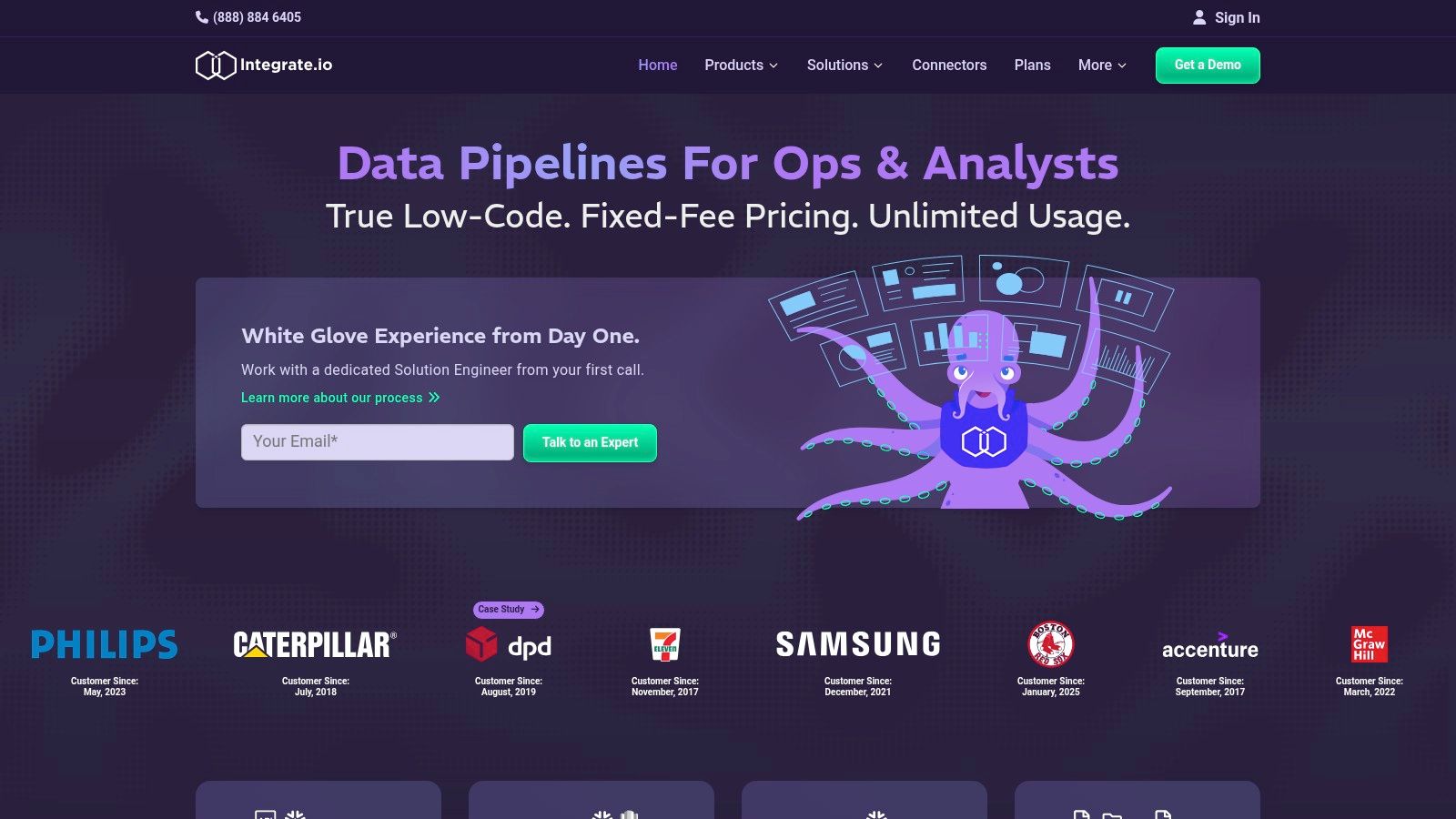
The platform provides a unified view of all pipeline jobs, displaying statuses like running, completed, or failed in real-time. This holistic dashboard is one of the key reasons it ranks high among data pipeline monitoring tools. Users can set up customizable alerts via email, webhooks, or Slack to be notified of errors or anomalies, ensuring prompt issue resolution. This proactive approach is crucial for maintaining data integrity, especially when managing automated processes. As discussed in our guide on automated data pipelines, this level of visibility is key to building trust in your data flows.
Core Features & Analysis
- Monitoring & Alerts: Users receive detailed logs and error reports directly from the dashboard. For instance, if a job to sync Salesforce data fails due to an expired API token, you get an immediate alert with a clear error message, allowing you to take corrective action instead of discovering the issue days later from an outdated report.
- Usability: The no-code/low-code interface dramatically lowers the barrier to entry. Business analysts and data stewards can build and monitor pipelines that would typically require a dedicated data engineer.
- Connectors: With over 200 pre-built connectors, integration with diverse data sources (databases, SaaS apps, data warehouses) is straightforward, reducing setup time significantly.
Website: https://www.integrate.io
2. Fivetran
Fivetran is an automated data integration platform that specializes in delivering reliable, maintenance-free data pipelines. It stands out by abstracting away the complexities of pipeline management, allowing teams to focus on analytics rather than infrastructure. A core strength is its powerful, built-in monitoring, which provides deep visibility into data movement and health, making it a top contender among data pipeline monitoring tools. The platform is designed for operational efficiency, ensuring data arrives consistently and accurately in your destination warehouse.
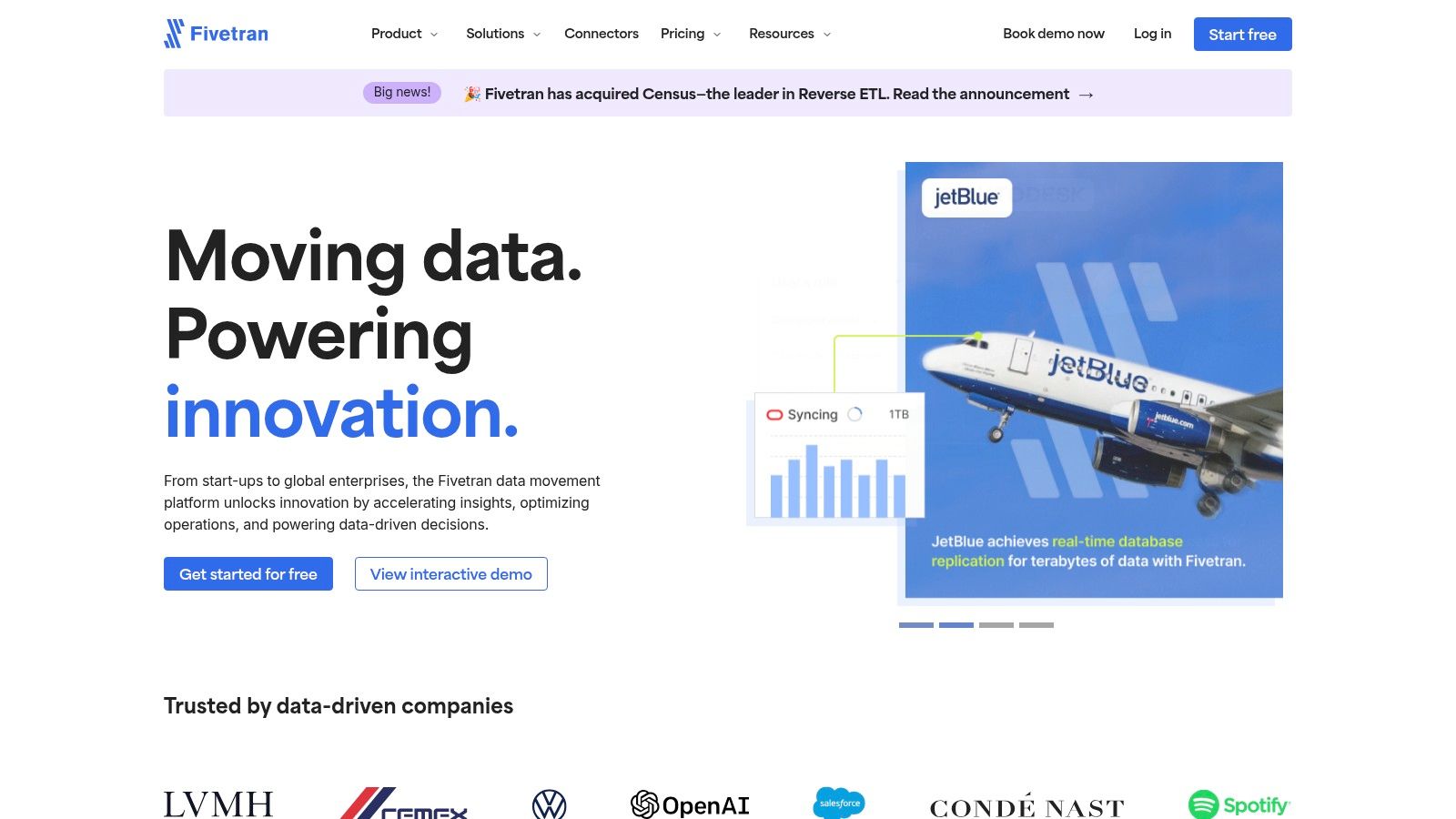
The centralized dashboard provides at-a-glance status updates on all connectors, with logs and alerts that simplify troubleshooting. For instance, if a source API's schema changes unexpectedly, Fivetran automatically adapts and flags the change in its logs. If manual intervention is required, it alerts the user with precise instructions. This automated governance is a key tenet of the principles of modern data architecture, ensuring data systems remain resilient and trustworthy with minimal manual oversight.
Core Features & Analysis
- Monitoring & Alerts: Fivetran offers a centralized dashboard with real-time sync statuses, detailed logs, and automated email notifications for sync delays or failures. A practical example is its data lineage graph, which can show you exactly which dashboard will be affected if a specific source table sync fails, providing immediate context for impact analysis.
- Usability: The platform is renowned for its "set it and forget it" user experience. Its fully managed connectors require minimal configuration, empowering analytics teams to onboard new data sources without engineering support.
- Connectors: With an extensive library of pre-built, fully managed connectors, Fivetran automates the entire ELT process, handling schema changes and API updates seamlessly, which significantly reduces maintenance overhead.
Website: https://www.fivetran.com
3. Hevo Data
Hevo Data is a no-code data pipeline platform that simplifies real-time data integration and monitoring, helping teams ensure data quality and reliability. It excels by providing an automated, fault-tolerant architecture that makes building and overseeing data flows accessible to users of all technical levels. The platform is designed for speed and simplicity, allowing for the quick setup of pipelines that pull data from numerous sources into a central warehouse. Its real-time visibility is a core component, making it one of the more intuitive data pipeline monitoring tools available.
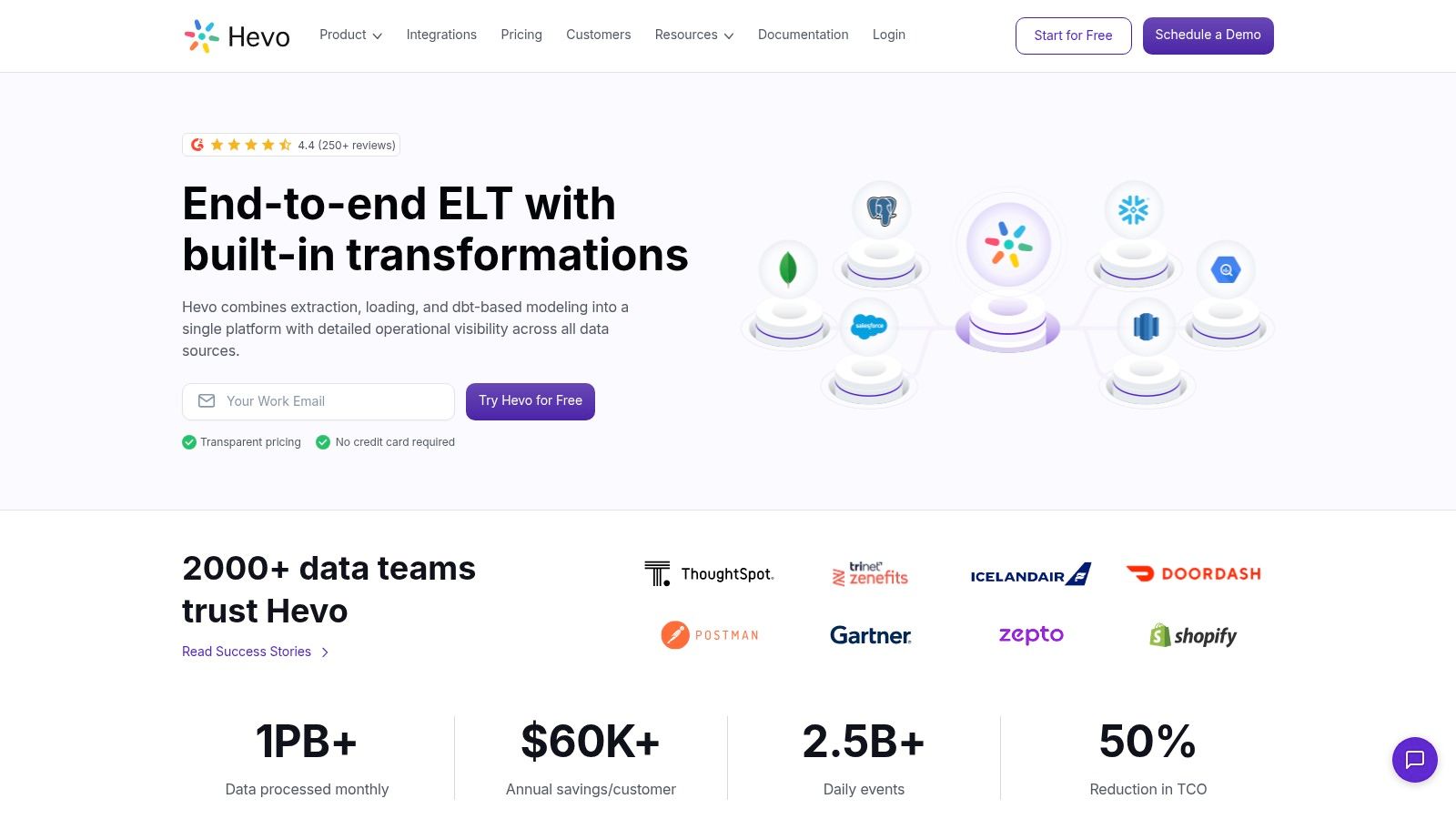
The platform’s strength lies in its user-friendly dashboard, which offers a clear overview of all active pipelines, their statuses, and recent events. Users can quickly identify bottlenecks or failures without digging through complex logs. For example, a marketing team using Hevo to sync data from Salesforce and Google Ads into BigQuery can instantly see if a pipeline has stalled, ensuring their analytics dashboards remain accurate. This focus on operational transparency is critical for maintaining trust in the data, a central theme in our discussion on how real-time data pipelines power modern analytics.
Core Features & Analysis
- Monitoring & Alerts: Provides an intuitive dashboard with real-time pipeline visibility and automatic alerts for any failures or anomalies. For example, you can set an alert for when event volume from a specific source drops by 50%, providing an actionable insight that a tracking script might be broken on your website.
- Usability: The no-code interface is extremely user-friendly, allowing non-technical users to set up and manage data pipelines efficiently. The guided setup process minimizes initial configuration time.
- Connectors: Offers over 150 pre-built connectors for databases, SaaS applications, and cloud storage, facilitating seamless integration across a diverse data ecosystem.
- Transformations: Supports preload transformations using Python, giving users flexibility to clean, enrich, and structure data before it lands in the destination warehouse.
Website: https://hevodata.com
4. Stitch (by Talend)
Stitch is a cloud-first, developer-focused ETL platform that simplifies moving data from various sources into a data warehouse. Acquired by Talend, its strength lies in providing transparent, low-maintenance pipelines with automated monitoring and alerting capabilities. The platform is designed for rapid deployment, allowing engineering teams to set up data ingestion flows in minutes and spend less time on maintenance, making it a powerful component in any modern data stack.
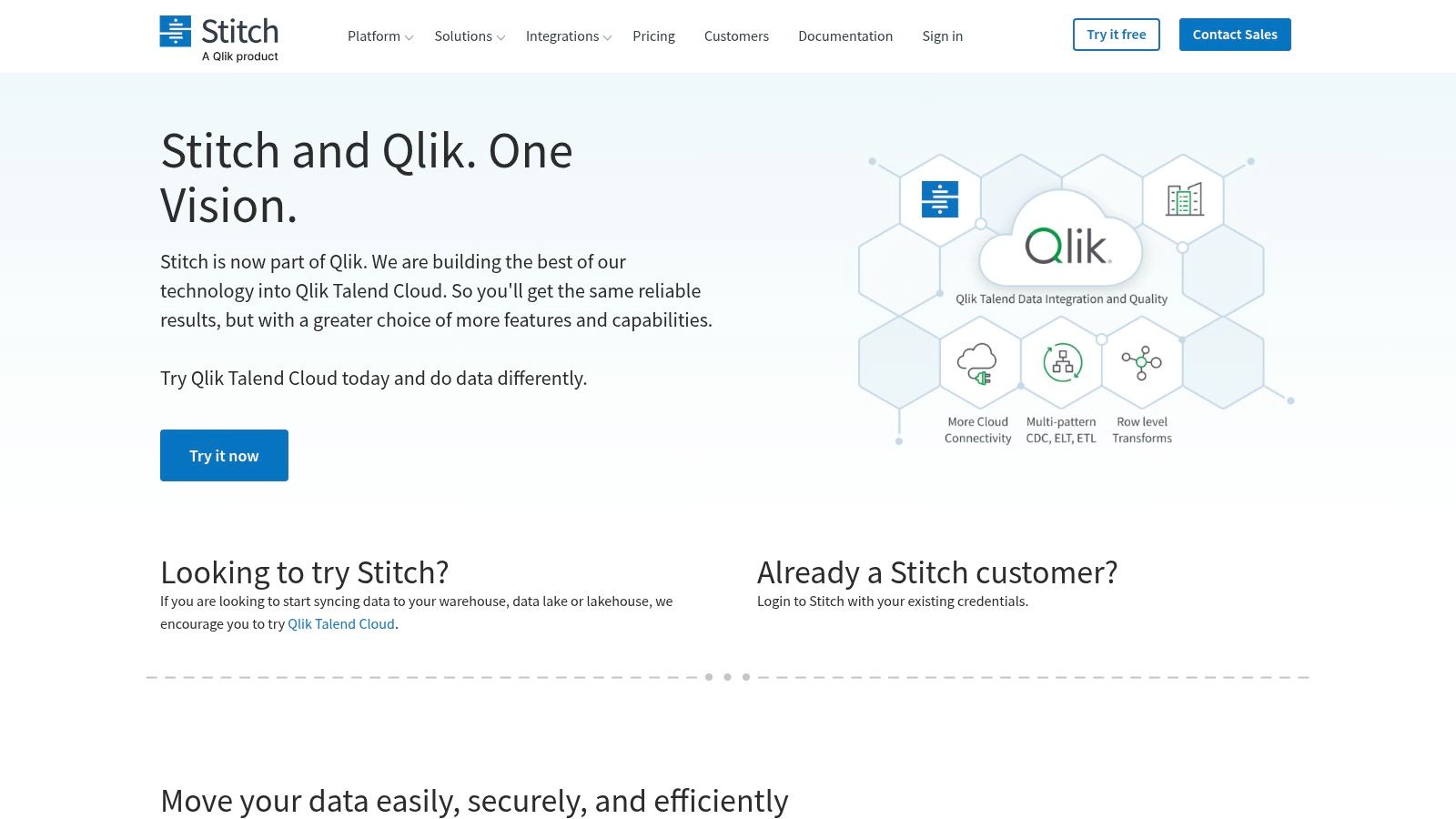
The platform offers a clear dashboard where users can monitor sync schedules, data volumes, and the status of each integration. Stitch sends automated email alerts for any replication errors or connectivity issues, ensuring teams are immediately aware of pipeline failures. This hands-off monitoring is a key reason it is considered one of the leading data pipeline monitoring tools for teams that prioritize efficiency. Overcoming such issues is one of the key data integration challenges that a tool like Stitch helps solve by providing immediate, actionable notifications.
Core Features & Analysis
- Automated Monitoring: Stitch provides out-of-the-box monitoring with detailed error logging and notifications for failed loads or schema changes. For instance, if an API adds a new field, Stitch automatically adds it to the destination schema and notifies you, preventing data loss without manual intervention. This is an actionable insight into source data evolution.
- Extensive Connector Library: With over 140 built-in connectors for popular SaaS applications and databases, getting data flowing is incredibly fast. The open-source nature of its integration framework (Singer) also allows for custom source development.
- Talend Integration: As part of the Talend ecosystem, Stitch can be a gateway to more advanced data quality, transformation, and governance features available in Talend Data Fabric, though this requires using additional tools.
Website: https://www.stitchdata.com
5. Gravity Data
Gravity Data is a dedicated data integration and automation platform that emphasizes reliability through its robust, real-time monitoring capabilities. It is engineered for teams that require high visibility into their data flows, providing automated notifications and detailed diagnostics to ensure pipeline integrity from source to destination. The platform combines a user-friendly environment with powerful backend processing, making it a strong contender among data pipeline monitoring tools for businesses that cannot afford data downtime or inconsistencies.
The core of Gravity Data's monitoring system is its centralized dashboard, which offers an at-a-glance overview of all active and historical pipeline runs. Users can immediately identify failures, bottlenecks, or performance degradation. This is complemented by a proactive alerting system that integrates with essential communication channels, ensuring that data teams are notified of critical issues the moment they occur. This focus on immediate, actionable insight allows for rapid troubleshooting and helps maintain trust in the data being delivered.
Core Features & Analysis
- Monitoring & Alerts: The platform provides real-time monitoring with automated notifications sent via email, Slack, or other webhook-compatible services. A practical example would be receiving a Slack alert that a pipeline has failed due to a schema mismatch, with a direct link to the logs showing the exact column causing the issue. This actionable information drastically cuts down debugging time.
- Connectors: With over 110 built-in connectors for popular APIs, databases, and SaaS platforms, Gravity Data simplifies the process of connecting disparate systems. This extensive library reduces the need for custom development and maintenance.
- Usability: While powerful, the interface is designed to be accessible. Data professionals can configure complex workflows and set up monitoring parameters without extensive manual scripting, accelerating the deployment of reliable data pipelines.
Website: https://www.gravitydata.io
6. Splunk
Splunk is a powerful data analytics platform that leverages machine learning and AI to transform raw machine data into actionable operational intelligence. While widely known for its security and IT operations capabilities, it is also a formidable choice for monitoring complex data pipelines. It excels at ingesting, processing, and visualizing high-volume, real-time data streams from virtually any source, making it a cornerstone for enterprises that require deep visibility into their data infrastructure.
The platform provides powerful dashboards that allow teams to visualize pipeline health, data flow rates, and error patterns in real-time. This comprehensive view makes Splunk one of the most robust data pipeline monitoring tools for organizations with mature data ecosystems. Its AI-powered insights can automatically detect anomalies in data latency or throughput, alerting engineers to potential bottlenecks before they impact downstream systems. This proactive monitoring is especially critical for maintaining the integrity of data used in security applications; as detailed in our post, you can explore how Splunk enhances network security by detecting unusual data access patterns.
Core Features & Analysis
- Real-Time Monitoring: Splunk indexes streaming data as it arrives, enabling immediate querying and visualization. For example, a data engineer can create a real-time dashboard tracking the latency of a Kafka-to-Snowflake pipeline, with alerts that trigger if the end-to-end delay exceeds a 5-minute threshold, providing an actionable SLA monitoring system.
- AI-Powered Insights: The platform uses machine learning to identify unusual patterns and predict potential failures, moving beyond simple threshold-based alerts to provide intelligent, proactive oversight. For example, it can detect a gradual slowdown in a data ingestion job that might otherwise go unnoticed.
- Advanced Analytics: Its Search Processing Language (SPL) offers immense flexibility for creating custom queries, reports, and dashboards, although it does present a steeper learning curve compared to GUI-based tools.
Website: https://www.splunk.com
7. Mozart Data
Mozart Data is a comprehensive data management platform that offers an out-of-the-box solution for centralizing, organizing, and preparing data for analysis. It stands out by providing clear, end-to-end observability across the entire data pipeline, allowing teams to visualize dependencies between tables and transformations. This emphasis on a holistic view makes it one of the most intuitive data pipeline monitoring tools for teams wanting to quickly understand their data lineage and troubleshoot issues without deep engineering overhead.
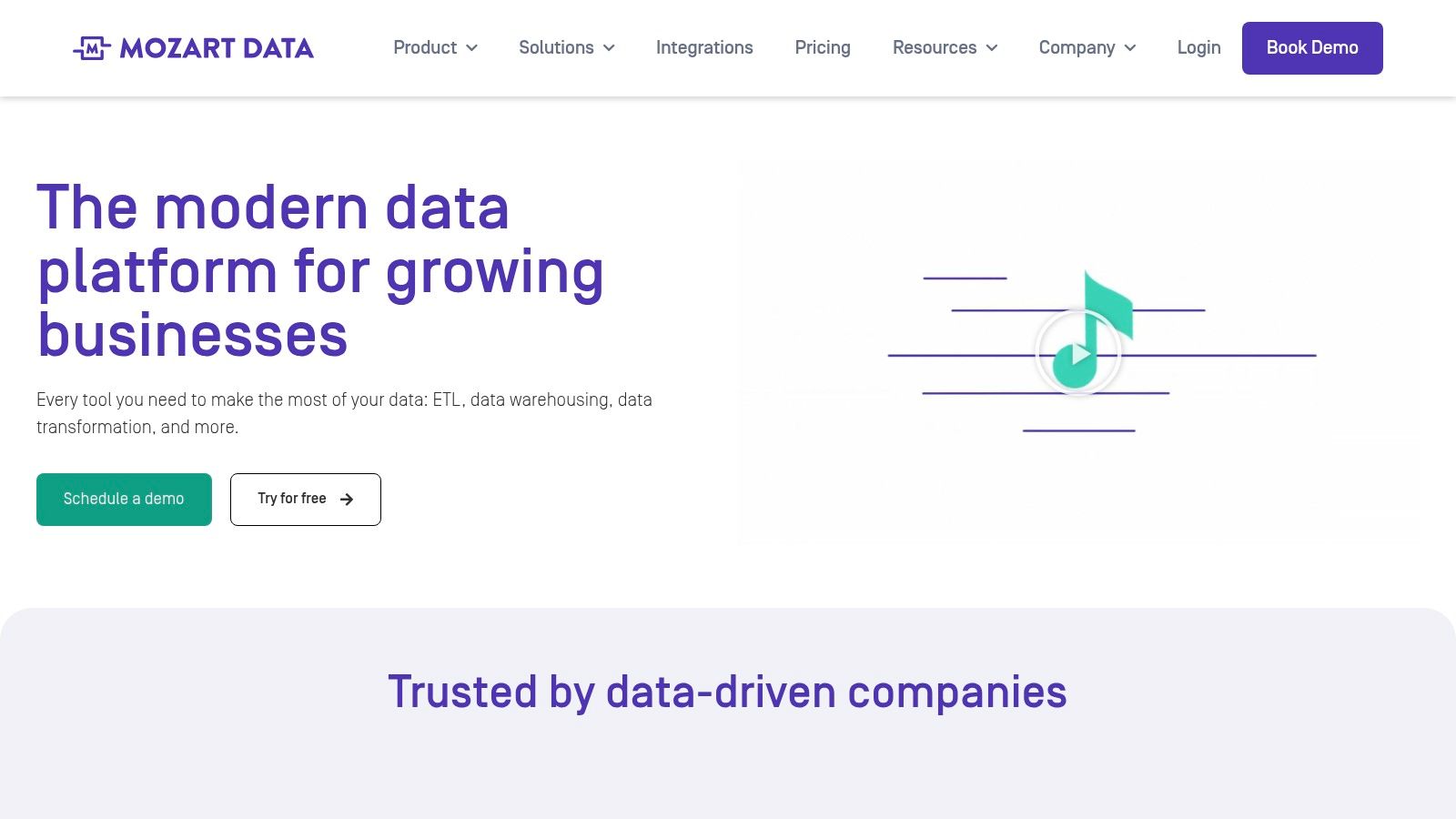
The platform’s strength lies in its ability to abstract away the complexity of the modern data stack. It provides intuitive indicators for pipeline health and offers fast troubleshooting through clear dependency tracking. For example, if a BI dashboard report is inaccurate, a user can trace the data flow backward through Mozart Data to pinpoint exactly which transformation or source failed. This actionable insight drastically reduces the time to resolution. A well-monitored system is a core pillar of the essentials of modern data infrastructure.
Core Features & Analysis
- Pipeline Observability: Mozart Data provides a clear, visual map of your data pipeline, showing how tables are created and connected. For instance, before changing a SQL transformation, you can instantly see all downstream tables and BI reports that will be affected, providing actionable insight for impact analysis.
- User-Friendly Troubleshooting: The interface is designed for simplicity, enabling less technical users to diagnose and understand pipeline issues without needing to read complex logs or code.
- Integrated Data Stack: It combines ETL, a data warehouse (Snowflake), and a transformation layer into a single managed service, simplifying setup and maintenance significantly.
Website: https://www.mozartdata.com
8. Monte Carlo
Monte Carlo is a data observability platform that specializes in providing end-to-end data reliability and eliminating "data downtime." Unlike tools focused solely on pipeline execution, Monte Carlo uses machine learning to automatically monitor data assets across warehouses, lakes, and business intelligence tools, learning what "good" data looks like. It detects anomalies in freshness, volume, schema, and quality, making it a critical component for teams aiming to build trust in their data products. Its focus is less on the pipeline's operational status and more on the quality of the data flowing through it.
The platform excels at providing deep visibility and automated monitoring, which is why it’s a leading choice among modern data pipeline monitoring tools. By creating a baseline of your data's normal behavior, it can proactively alert teams via Slack, PagerDuty, or email when unexpected issues arise. For instance, if an upstream API change causes a column of user_ids to suddenly become null, Monte Carlo detects the quality dip and traces its origin, enabling rapid root cause analysis. This provides an actionable insight that prevents bad data from corrupting downstream models and reports.
Core Features & Analysis
- Automated Monitoring: The platform requires minimal configuration to start monitoring. It automatically infers rules and sets monitors for key tables, reducing the manual effort typically required to ensure data quality.
- End-to-End Lineage: Monte Carlo offers automated field-level lineage, allowing users to see exactly how data flows from its source to its destination. A practical example is tracing a broken KPI in a Tableau dashboard all the way back to a specific failed dbt model, providing an actionable starting point for the data engineering team.
- Security: As a SOC 2 Type 2 certified platform, Monte Carlo provides robust security controls, which is a key consideration for enterprises handling sensitive data.
Website: https://www.montecarlodata.com
9. Acceldata
Acceldata is a comprehensive data observability platform focused on providing end-to-end visibility and operational intelligence across the entire data stack. It is engineered to prevent data outages and optimize pipeline performance by correlating signals across compute, data, and pipeline layers. Unlike many tools that focus solely on pipeline status, Acceldata dives deep into system-level metrics, data quality, and cost management, making it an excellent choice for enterprises managing complex, large-scale data ecosystems. Its strength is in its holistic approach, treating data pipelines not as isolated workflows but as integral parts of a broader data infrastructure.
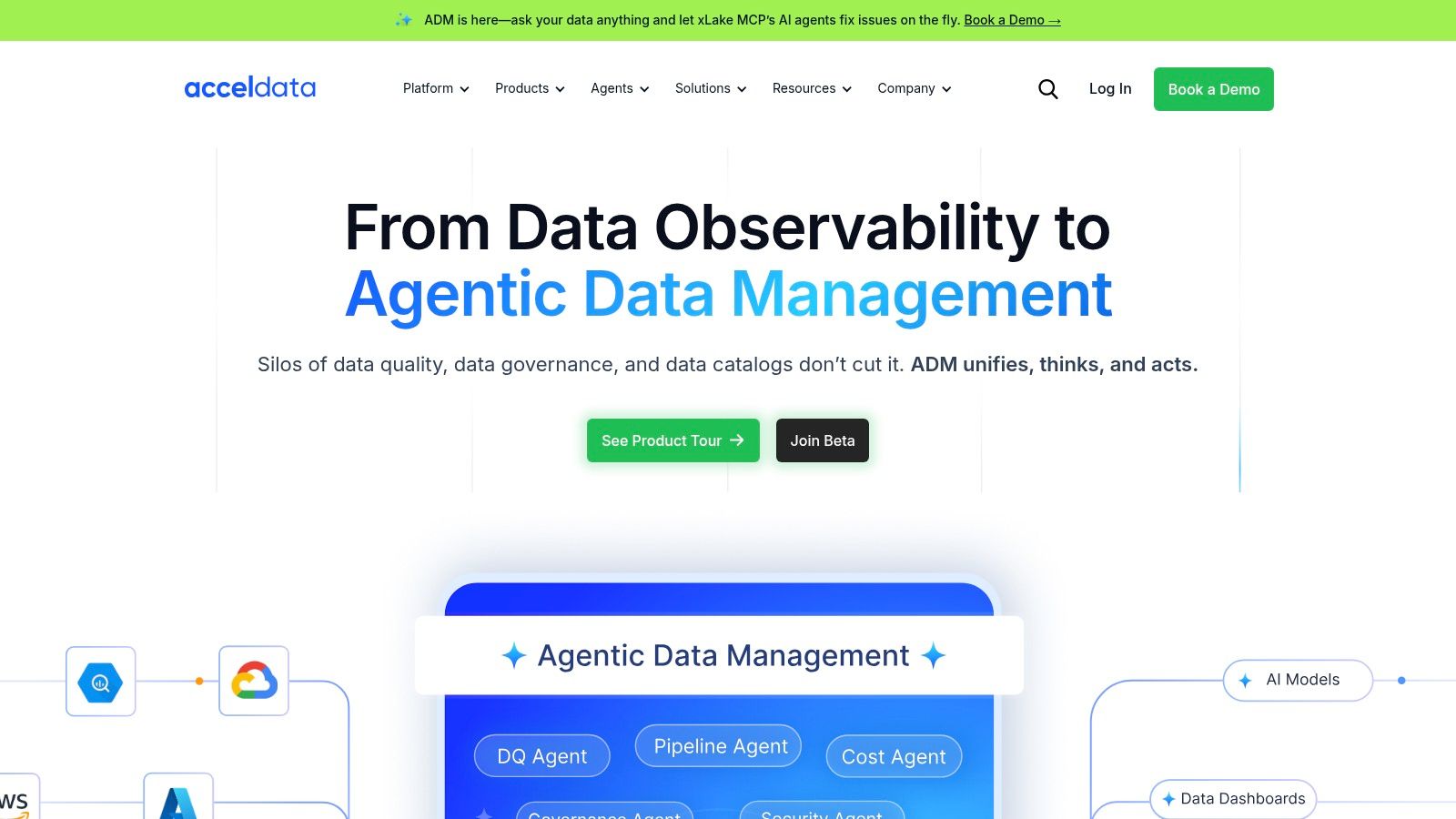
The platform offers a unified dashboard that provides deep insights into pipeline behavior, resource consumption, and data reliability. This makes Acceldata a powerful solution among data pipeline monitoring tools for teams needing more than just simple failure alerts. For example, it can proactively flag a Spark job that is consuming excessive memory, allowing engineers to intervene before it fails or drives up costs. This preventative capability is a core principle of data observability for reliable pipelines, turning monitoring into a proactive optimization activity.
Core Features & Analysis
- End-to-End Visibility: Acceldata provides detailed data lineage that maps dependencies across pipelines, helping teams perform root cause analysis quickly when an issue arises.
- Performance Optimization: The platform monitors compute resource usage (CPU, memory) and data processing workloads to identify inefficiencies. For example, it can provide an actionable recommendation to re-partition a table that is causing slow query performance in downstream pipelines, directly improving efficiency and reducing costs.
- Data Reliability: It includes robust data quality checks and reconciliation features, ensuring that data moving through the pipelines is accurate and trustworthy before it reaches downstream consumers.
Website: https://www.acceldata.io
10. Datadog
Datadog is a comprehensive, cloud-based monitoring platform that offers deep visibility across applications, infrastructure, and networks. While known as a general observability solution, its power extends significantly into the data realm, making it one of the most versatile data pipeline monitoring tools available. It excels at consolidating logs, metrics, and traces from diverse sources like Kafka, Spark, and Airflow into a single, unified view, enabling teams to correlate performance issues across their entire data stack. This holistic approach is its key differentiator, moving beyond simple job status tracking to provide granular, end-to-end pipeline performance analysis.
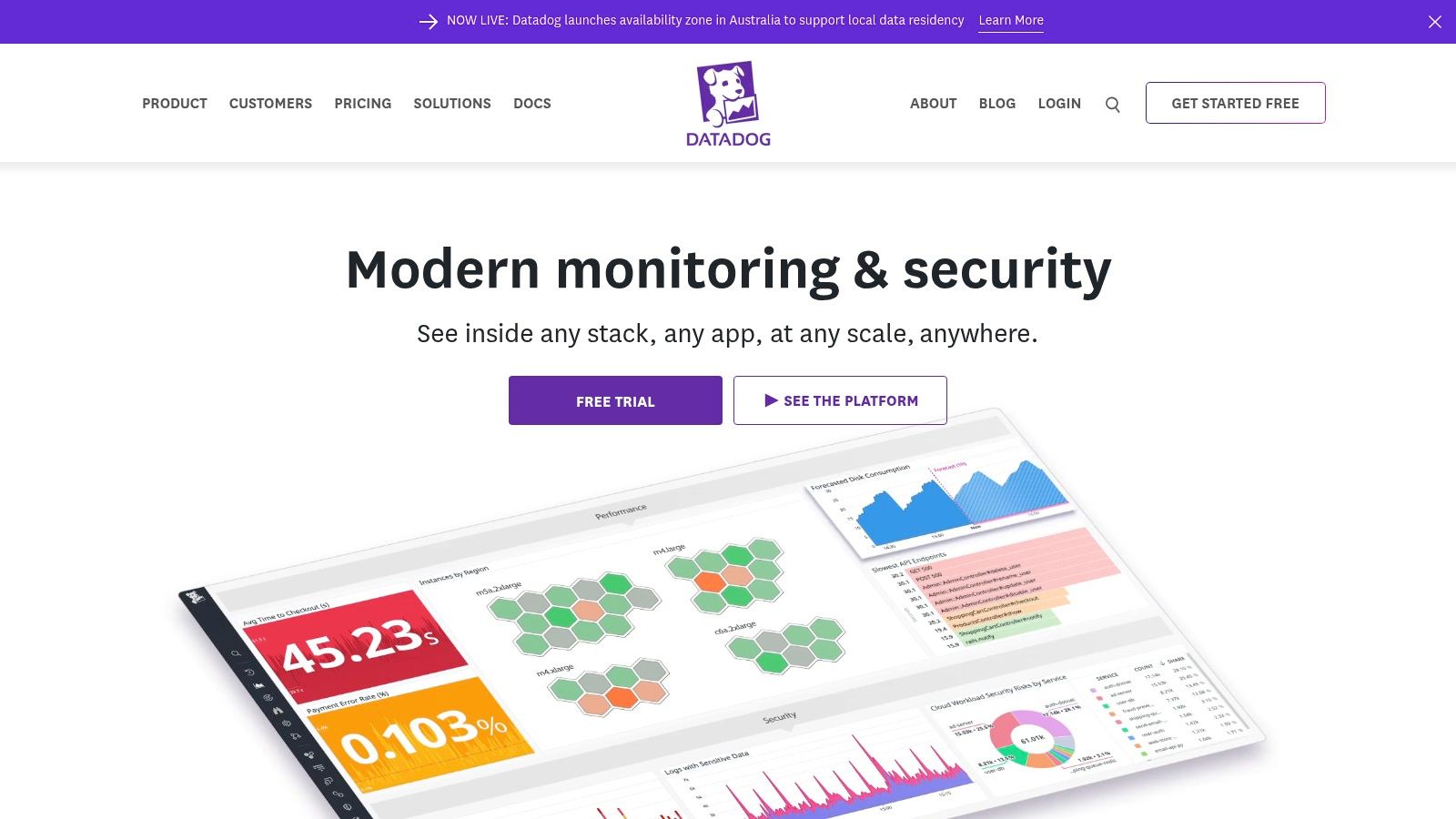
The platform allows data engineers to build custom dashboards that track key pipeline metrics such as data latency, throughput, and error rates in real-time. For instance, you could visualize a Kafka topic's message lag alongside the CPU utilization of the consuming Spark job, immediately identifying resource bottlenecks. This level of detail is also crucial for MLOps, as you can learn more about its role in machine learning model monitoring. Its powerful log analysis capabilities help teams troubleshoot failures quickly by searching and filtering logs from all pipeline components in one place.
Core Features & Analysis
- Monitoring & Alerts: Provides customizable dashboards and over 700 integrations for a complete view. A practical example is setting up an anomaly detection alert that notifies you when data volume from an IoT sensor feed drops unexpectedly, giving you an actionable signal to check the source devices.
- Usability: The interface is clean and user-friendly, although the sheer volume of features can have a steep learning curve for new users. Setting up effective monitoring requires a clear understanding of what metrics to track.
- Log Management: Offers powerful, index-free log analysis that allows for rapid troubleshooting without predefined schemas. Users can correlate logs with traces and metrics to get a full picture of any incident.
Website: https://www.datadoghq.com
11. Apache Airflow
Apache Airflow is a powerful, open-source platform programmatically authored, scheduled, and monitored for data engineering workflows. It excels at managing complex, long-running tasks and their dependencies, treating pipelines as Directed Acyclic Graphs (DAGs) defined in Python code. This code-first approach offers unparalleled flexibility, allowing engineers to build highly customized and sophisticated data processing jobs. Its strength as a data pipeline monitoring tool comes from its detailed web-based user interface, which provides deep visibility into task execution and overall workflow health.
The Airflow UI offers a comprehensive dashboard where users can inspect DAG runs, view logs for individual task instances, and manually trigger or retry jobs. This granular control is essential for debugging failures and ensuring data integrity. For example, if a specific task in an ETL pipeline fails, an engineer can examine its logs directly in the UI, identify the root cause, and re-run only the failed portion. Implementing it effectively requires a solid grasp of modern engineering practices, as covered in our guide to data architecture principles.
Core Features & Analysis
- Workflow Monitoring: The UI provides multiple views (Graph, Gantt, Tree) to visualize dependencies and track progress. For example, the Gantt chart provides an actionable insight into pipeline bottlenecks by showing which tasks are taking the longest to run over historical periods.
- Extensibility & Integration: Being open-source and Python-based, Airflow is highly extensible. A vast library of community-contributed operators allows it to integrate with virtually any data source, tool, or cloud service.
- Customization: Since pipelines are defined as code, alerting and monitoring logic can be fully customized. Users can implement an
on_failure_callbackfunction to send a detailed Slack alert with task details and logs, providing instant, actionable context to the on-call engineer.
Website: https://airflow.apache.org
12. New Relic
New Relic is a powerful, cloud-based observability platform that offers comprehensive, real-time monitoring of applications, infrastructure, and networks. While known for application performance monitoring (APM), its full-stack capabilities make it an excellent choice for tracking the health of complex data pipelines. It provides deep visibility into the performance of each component in your data stack, from the source databases and processing jobs to the destination data warehouses, allowing teams to quickly pinpoint and resolve bottlenecks.
The platform consolidates logs, metrics, and traces into a unified view, which is why it is considered one of the leading data pipeline monitoring tools. For example, if a data pipeline that populates a critical business dashboard slows down, New Relic can trace the transaction from the initial data extraction through every microservice or function involved, highlighting exactly where the latency occurs. This level of detail supports the principles of DataOps by enabling continuous monitoring and rapid iteration. The ability to manage all errors from a single dashboard simplifies incident response and reduces mean time to resolution (MTTR).
Core Features & Analysis
- Full-Stack Observability: New Relic provides detailed, end-to-end views of your entire technology stack. For instance, if a Spark job is slow, you can correlate its performance with the underlying EC2 instance's CPU and memory usage, providing an actionable insight that the job needs more resources.
- Extensive Integrations: With over 500 pre-built integrations, it easily connects to a wide array of data sources, cloud services, and processing frameworks, simplifying the setup of a comprehensive monitoring environment.
- Unified Error Management: Users can track, triage, and analyze errors from across their applications and pipelines in a single, centralized dashboard, which greatly streamlines the debugging process.
Website: https://newrelic.com
Data Pipeline Monitoring Tools Comparison
| Platform | Core Features & Capabilities | User Experience & Quality ★ | Unique Selling Points ✨ | Target Audience 👥 | Price & Value 💰 |
|---|---|---|---|---|---|
| Integrate.io | No-code/low-code ETL/ELT, 200+ connectors, real-time alerts | User-friendly ★★★★ | CDC support, customizable monitoring ✨ | Non-technical, SMBs 👥 | Higher for small businesses 💰 |
| Fivetran | Automated governance, data lineage, centralized alerts | Robust monitoring ★★★★ | Automated maintenance, detailed lineage ✨ | Enterprises, data teams 👥 | Higher at scale 💰 |
| Hevo Data | No-code pipelines, real-time monitoring, 150+ connectors | Intuitive, fault-tolerant ★★★★ | Real-time dashboards | SMBs, tech users 👥 | Moderate 💰 |
| Stitch (Talend) | Data profiling, cleansing, 140+ connectors, auto updates | Easy integration ★★★ | Talend ecosystem integration ✨ | Enterprises, Talend users 👥 | Moderate to High 💰 |
| Gravity Data | Real-time monitoring, 110+ connectors, automated notifications | Comprehensive monitoring ★★★ | API & DB connector diversity | SMBs, data professionals 👥 | Higher for small businesses 💰 |
| Splunk | AI-powered insights, real-time streaming, dashboards | Advanced analytics ★★★★★ | AI-enhanced security & insights ✨ | Large enterprises, security 👥 | Premium pricing 💰 |
| Mozart Data | Pipeline observability, dependency tracking, fast troubleshooting | User-friendly ★★★★ | Clear pipeline dependencies ✨ | SMBs, data engineers 👥 | Higher for small businesses 💰 |
| Monte Carlo | Automated lineage, SOC 2 certified, instant notifications | Secure & comprehensive ★★★★ | Security focus, root cause analysis ✨ | Enterprises, compliance 👥 | Premium pricing 💰 |
| Acceldata | End-to-end visibility, incident detection, lineage | Scalable & optimized ★★★★ | Data outage prevention, large scale ✨ | Large data teams, enterprises 👥 | Technical setup needed 💰 |
| Datadog | Real-time visibility, customizable dashboards, log analysis | Comprehensive ★★★★ | Multi-platform integration | DevOps, infra teams 👥 | High at scale 💰 |
| Apache Airflow | Workflow scheduling, metrics, customizable alerts | Open-source, customizable ★★★★ | Large community support, flexible workflows ✨ | Data engineers, developers 👥 | Free/Open-source 💰 |
| New Relic | Full-stack monitoring, 500+ integrations, error management | Scalable & detailed ★★★★ | Extensive integrations ✨ | Enterprises, large scale 👥 | High cost 💰 |
Making the Right Choice: From Tools to a Trusted Data Ecosystem
Selecting the right data pipeline monitoring tool is more than a technical decision; it's a strategic investment in data trust, operational efficiency, and the overall reliability of your data ecosystem. Throughout this guide, we've journeyed through a diverse landscape of solutions, from all-in-one ETL and monitoring platforms like Integrate.io and Fivetran to specialized data observability powerhouses like Monte Carlo and Acceldata. The key takeaway is that there is no single "best" tool, only the tool that is best for your specific context.
Your final choice hinges on a careful evaluation of your organization's unique requirements. A startup or a small data team might find immense value in the simplicity and managed infrastructure of tools like Mozart Data or Stitch, which accelerate time-to-value without requiring deep engineering overhead. Conversely, a large enterprise with complex, bespoke data workflows and strict compliance needs might gravitate towards the comprehensive log analysis of Splunk or the extensible, code-first framework of Apache Airflow, where customization and control are paramount.
From Evaluation to Implementation: Your Actionable Next Steps
The goal is to move beyond simply collecting metrics and toward a state of proactive data health management. A successful implementation provides actionable insights, not just an overwhelming flood of alerts. To get there, you must align your chosen tool with your team's existing skills, data stack, and business objectives.
Consider these practical steps as you finalize your decision:
- Map Your Critical Pipelines: Before committing to a tool, identify your most business-critical data pipelines. Which ones directly power customer-facing applications, financial reporting, or key machine learning models? Focus your initial monitoring efforts here for the biggest impact.
- Define Your "Why": What specific problems are you trying to solve? Is it data downtime, silent data quality errors, or performance bottlenecks? A team struggling with data quality degradation will find more value in Monte Carlo, while a team plagued by slow-running jobs might lean toward the performance monitoring capabilities of Datadog or New Relic.
- Run a Proof of Concept (POC): Never skip the trial period. Implement your top two or three choices on a non-production, yet representative, segment of your data infrastructure. This real-world test is crucial for assessing ease of use, the quality of alerts, and how well the tool integrates with your existing systems like Slack, PagerDuty, and your data warehouse.
Ultimately, the best data pipeline monitoring tools transform your data infrastructure from a reactive, fragile system into a resilient, trustworthy foundation. As we often discuss in our guides like the one on modern data infrastructure, robust monitoring is not an add-on; it is a core component. By carefully selecting and implementing a tool that fits your workflow and culture, you empower your organization to innovate faster, make decisions with confidence, and unlock the true potential of your data assets.
Ready to architect a data infrastructure that's not only powerful but also reliable and observable from the ground up? At DATA-NIZANT, we specialize in designing and implementing robust data strategies that incorporate best-in-class monitoring practices. Visit DATA-NIZANT to learn how our expert guidance can help you build a data ecosystem you can trust.