
SCALA & SPARK for Managing & Analyzing BIG DATA

This entry is part 1 of 9 in the series Scala Series

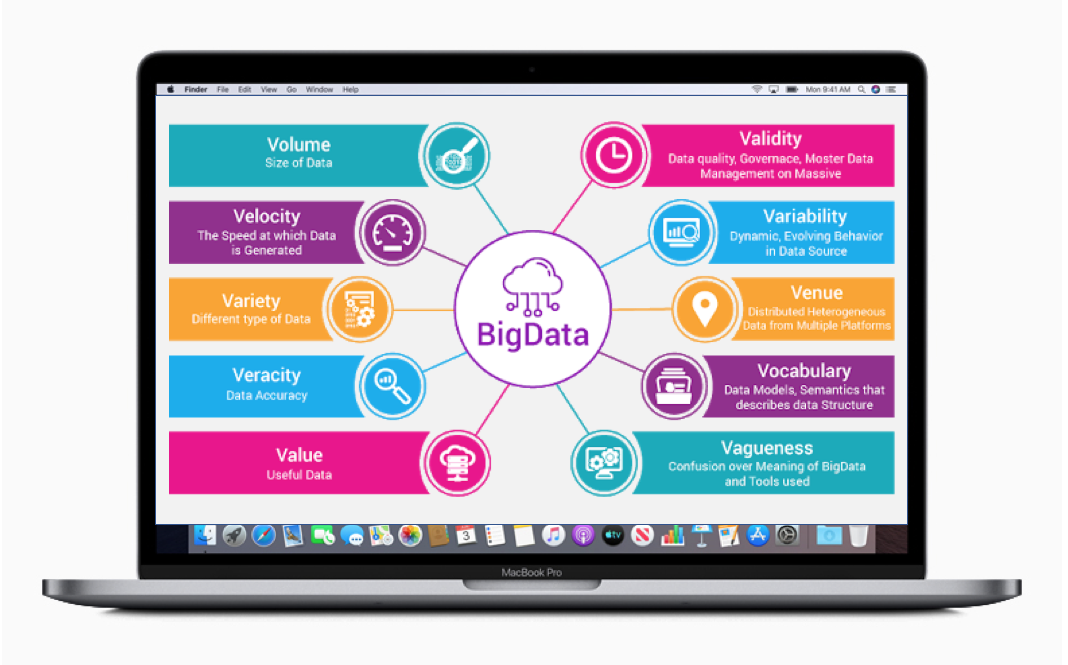
SCALA & SPARK for Managing & Analyzing BIG DATA In this blog, we’ll explore how to use Scala and Spark to manage and analyze Big Data effectively. When I first entered the Big Data world, Hadoop was the primary tool. As I discussed in my previous blogs: [What’s so BIG about Big Data (Published in 2013)] [Apache Hadoop 2.7.2 on macOS Sierra (Published in 2016)] Since then, Spark has emerged as a powerful tool, especially for applications where speed (or “Velocity”) is essential in processing data. We’ll focus on how Spark, combined with Scala, addresses the “Velocity” aspect of Big Data while introducing a proposed architecture and sample project to illustrate this framework. Table of Contents Introduction to Big Data and the 10 V’s Why Apache Spark over Hadoop MapReduce? Getting Started with Scala Apache Spark: An Introduction Proposed Architecture Framework Sample Project: Real-Time E-Commerce Recommendation System Data Flow Architecture Diagram Project Folder Structure Next Steps in Learning Scala and Spark 1. Introduction to Big Data and the 10 V’s Big Data has grown in scope to include not only Volume but also nine additional “V’s” that describe its challenges and characteristics: Volume: Scale of data. Velocity: Speed of data generation and processing. Variety: Diversity of data types. Veracity: Trustworthiness of data. Value: Potential insights from data. Variability: Inconsistencies in data. Visualization: Representing data meaningfully. Vulnerability: Data security. Volatility: Duration data remains relevant. Validity: Accuracy of data. By focusing on “Velocity,” we can harness Spark’s speed to process and analyze data in real time, enabling fast decision-making. 2. Why Apache Spark over Hadoop MapReduce? Comparing Hadoop MapReduce and Apache Spark for Big Data processing: Speed: Spark’s in-memory operations allow it to process data up to 100x faster than Hadoop. Use Case Fit: Spark excels with streaming data and quick turnarounds, while Hadoop handles vast data volumes with minimal memory use. Language Compatibility: Spark, written in Scala, works efficiently with Scala code, offering performance and simplicity in distributed processing tasks. 3. Getting Started with Scala What is Scala? Scala is a versatile language that merges object-oriented and functional programming paradigms. Running on the JVM, it is interoperable with Java, which enables seamless integration with Java libraries. Benefits of Scala for Big Data Conciseness: Reduces code complexity in data transformations. Interoperability: Scala can leverage Java libraries for Big Data, expanding its utility. Immutability: Supports safe parallel processing, which is crucial in distributed systems. 4. Apache Spark: An Introduction Apache Spark is a distributed data processing system optimized for large-scale data across clusters. Core Components Spark Core: Manages data operations, scheduling, and fault tolerance. Spark SQL: Enables SQL-based data querying. Spark Streaming: Processes real-time data streams. MLlib: Machine learning library for predictive analytics. GraphX: Spark’s API for graph processing. Spark’s Role in Big Data Spark’s speed and efficiency make it a preferred tool for applications needing quick data insights, such as real-time analytics, iterative machine learning, and streaming data. 5. Proposed Architecture Framework Below is a high-level architecture for implementing a Big Data management system with Scala and Spark. Data Ingestion Layer Tools: Kafka, Flume, Spark Streaming Purpose: Capture real-time or batch data from sources like databases, IoT sensors, and log files. Data Processing Layer Tools: Apache Spark with Scala Purpose: Perform transformations, aggregations, and enrichments. This includes: Batch Processing: For historical data. Real-Time Processing: For streaming analytics. Functions: Implemented in Scala using Spark SQL and DataFrames. Data Storage Layer Tools: HDFS, Amazon S3, Cassandra Purpose: Store raw and processed data for analytics and future use. Data Analytics and Machine Learning Layer Tools: MLlib, Spark SQL Purpose: Conduct predictive modeling, clustering, and pattern recognition. Data Access and Visualization Layer Tools: Apache Zeppelin, Grafana Purpose: Provide dashboards and interfaces for querying and visualizing data. 6. Sample Project: Real-Time E-Commerce Recommendation System Project Overview This project demonstrates a real-time recommendation system that processes clickstream data from an e-commerce platform, using Scala and Spark to recommend products. Ingest Data: Collect customer actions on the e-commerce site (e.g., clicks, views) into a Kafka topic. Process Data: Transform data to create user profiles and detect purchase intent. Build Recommendation Model: Use collaborative filtering with MLlib to recommend products based on user behavior. Store Data: Save processed profiles and recommendations to Cassandra for quick access. Visualize Data: Present popular products and recommendations in a real-time dashboard. Step-by-Step Implementation Set Up Ingestion with Kafka scala Copy code val kafkaStream = KafkaUtils.createStream(ssc, “localhost:2181”, “ecommerce-group”, Map(“user_clickstream” -> 1)) Process Data with Spark SQL scala Copy code val clickData = kafkaStream.map(_._2).toDF(“user_id”, “product_id”, “action”, “timestamp”) clickData.createOrReplaceTempView(“user_clicks”) Build Recommendation Model with MLlib scala Copy code val ratingsRDD = clickData.rdd.map(row => Rating(row.getInt(0), row.getInt(1), row.getDouble(2))) val model = ALS.train(ratingsRDD, rank = 10, numIterations = 10, 0.01) Store Data in Cassandra scala Copy code clickData.write.format(“org.apache.spark.sql.cassandra”).option(“table”, “user_profiles”).save() Visualize with Grafana Connect Grafana to the data source for real-time visualizations. 7. Data Flow Architecture Diagram Below is a whiteboard-style architecture diagram illustrating the data flow for this project. 8. Project Folder Structure Organize the project as follows to keep code modular and organized. css Copy code ecommerce-recommendation-system/ │ ├── src/ │ ├── main/ │ │ ├── scala/ │ │ │ ├── ingestion/ │ │ │ │ └── KafkaConsumer.scala │ │ │ ├── processing/ │ │ │ │ └── DataProcessor.scala │ │ │ └── ml/ │ │ │ └── RecommendationModel.scala │ ├── test/ │ │ └── scala/ │ │ └── RecommendationTest.scala │ ├── resources/ │ └── config/ │ └── application.conf │ ├── docs/ │ └── architecture-diagram.png │ ├── README.md └── build.sbt src/main/scala: Source code for ingestion, processing, and machine learning modules. src/test/scala: Unit tests for each module. resources/config: Configuration files for Kafka, Cassandra, and Spark. docs: Documentation and architecture diagram. README.md: Project overview and instructions. 9. Next Steps in Learning Scala and Spark Deepen Scala Knowledge: Learn functional programming, concurrency, and type-safe design patterns. Master Spark’s Ecosystem: Advance with Spark SQL, MLlib, and GraphX. Optimize Spark Performance: Study tuning techniques like caching and partitioning. Deploy on Cloud Platforms: Set up Spark on AWS EMR or Databricks for handling large datasets. Real-Time Projects: Practice with real-time streaming applications and big data integration tools like Kafka. In this blog, we covered why Scala and Spark are an ideal combination for managing and analyzing Big Data, particularly in real-time applications like e-commerce recommendations. We explored the proposed architecture, walked through a practical project example, and examined how each component—Kafka, Spark, Cassandra, MLlib, and Grafana—plays a role in the data flow from ingestion to visualization. In future blogs, we’ll dive deeper into specific elements like Scala programming basics, Spark’s core features, and tools such as Kafka, Cassandra, and MLlib. This series will help you gain a comprehensive understanding of each tool and how they collectively power Big Data applications. By following this series, you’ll develop a solid foundation for managing, processing, and analyzing data using Scala, Spark, and complementary technologies.         Kinshuk Dutta New York

The Power of Scala in Data-Intensive Applications

This entry is part 2 of 9 in the series Scala Series

The Power of Scala in Data-Intensive Applications: Concluding the Series Originally posted January 2019 by Kinshuk Dutta After exploring Scala’s core functionalities, from basics to advanced concepts, we’re concluding this series by demonstrating how to bring everything together into a robust, scalable project. Scala’s versatility has made it a popular choice across industries, from fintech to retail, where companies harness its functional programming and concurrency features to handle data-intensive applications. This blog includes: An overview of how companies use Scala for a competitive edge. Tips, tricks, and best practices. Recommended resources to dive even deeper into Scala. A final, comprehensive project that incorporates concepts from this series. Table of Contents Scala in Industry Tips and Tricks for Scala Development Recommended Books and Resources Final Project: Real-Time Data Pipeline Project Overview Project Structure Step-by-Step Implementation Testing and Validation Conclusion Scala in Industry Many companies have adopted Scala, leveraging its combination of functional programming, object-oriented capabilities, and seamless integration with the JVM. Here’s a glimpse into how Scala benefits some key industries: 1. Finance Use Case: Financial services and trading platforms leverage Scala for its performance and functional programming, which is ideal for risk analysis, real-time transaction processing, and data analysis. Example: Morgan Stanley uses Scala in its risk analysis platforms. The type safety and functional nature of Scala reduce errors in financial calculations, increasing reliability and reducing operational risk. 2. E-commerce Use Case: E-commerce platforms process enormous volumes of customer data to provide recommendations and analyze shopping patterns in real-time. Example: Twitter uses Scala’s asynchronous programming with Futures and Actors, supporting real-time tweets, notifications, and recommendation systems. 3. Retail Use Case: Retail giants like Walmart and Target use Scala to power their recommendation engines and manage complex inventory and supply chain logistics. Example: Zalando uses Scala for building microservices that manage everything from inventory levels to personalized shopping experiences. 4. Big Data and AI Use Case: Scala integrates with Apache Spark, making it ideal for big data analytics, data processing, and machine learning workflows. Example: Spotify leverages Scala for its backend, enabling data streaming, playlist recommendations, and dynamic user experiences based on data from millions of users. Tips and Tricks for Scala Development Embrace Immutability: Prefer immutable data structures, especially when dealing with concurrency. Use Pattern Matching Wisely: Scala’s pattern matching makes code readable but avoid overly complex nested matches that may reduce readability. Avoid Side Effects: Functional programming discourages side effects; embrace this by avoiding mutable states or random behavior. Leverage the Power of Collections: Scala’s collection library is rich and supports operations like map, filter, reduce, and fold. Use these operations instead of traditional loops. Apply Type Annotations in Public APIs: Scala’s type inference is powerful, but for clarity and maintainability, annotate public API types explicitly. Recommended Books and Resources Scala for the Impatient by Cay S. Horstmann: A practical book for beginners and intermediates. Functional Programming in Scala by Paul Chiusano and Runar Bjarnason: A deep dive into functional programming principles in Scala. Programming in Scala by Martin Odersky: An in-depth guide by Scala’s creator, ideal for advanced learners. Scala Cookbook by Alvin Alexander: A collection of Scala recipes covering a broad range of programming problems. Final Project: Real-Time Data Pipeline In this final project, we’ll apply Scala’s capabilities to build a Real-Time Data Pipeline that can process incoming data from multiple sources, validate and transform it, and output insights in real-time. This project reflects what a real-world data pipeline would look like for companies managing streaming data in domains like IoT, finance, and e-commerce. Project Overview Objective: Process real-time data, filter anomalies, and generate actionable insights. Components: Data Ingestion: Simulate streaming data from multiple sources. Validation: Validate incoming data using Scala’s pattern matching and error handling. Transformation and Aggregation: Transform data for insights, e.g., average calculation, count metrics. Output: Store processed data or output it to a dashboard. Project Structure plaintext Copy code real-time-data-pipeline │ ├── src │ ├── main │ │ ├── scala │ │ │ ├── models │ │ │ │ ├── DataRecord.scala │ │ │ ├── services │ │ │ │ ├── DataIngestionService.scala │ │ │ │ ├── DataValidationService.scala │ │ │ │ ├── DataProcessingService.scala │ │ │ │ ├── OutputService.scala │ │ │ ├── Main.scala │ ├── test │ ├── scala │ │ ├── services │ │ │ ├── DataIngestionServiceTest.scala │ │ │ ├── DataValidationServiceTest.scala │ │ │ ├── DataProcessingServiceTest.scala │ │ │ ├── OutputServiceTest.scala └── build.sbt Step-by-Step Implementation Step 1: Define Models DataRecord.scala scala Copy code package models case class DataRecord(sensorId: String, timestamp: Long, value: Double) Step 2: Implement Services DataIngestionService.scala scala Copy code package services import models.DataRecord import scala.util.Random object DataIngestionService { def fetchData(): List[DataRecord] = { // Simulating random data (1 to 10).map { _ => DataRecord( sensorId = s”sensor_${Random.nextInt(100)}”, timestamp = System.currentTimeMillis(), value = Random.nextDouble() * 100 ) }.toList } } DataValidationService.scala scala Copy code package services import models.DataRecord object DataValidationService { def validateRecord(record: DataRecord): Either[String, DataRecord] = { if (record.value >= 0 && record.value <= 100) Right(record) else Left(s”Invalid data: $record”) } } DataProcessingService.scala scala Copy code package services import models.DataRecord object DataProcessingService { def calculateAverage(records: List[DataRecord]): Double = { val validRecords = records.filter(_.value >= 0) validRecords.map(_.value).sum / validRecords.size } } OutputService.scala scala Copy code package services object OutputService { def logProcessedData(average: Double): Unit = { println(s”Processed data average value: $average”) } } Main.scala scala Copy code package main import services._ object Main extends App { val rawData = DataIngestionService.fetchData() val validatedData = rawData.flatMap { case record => DataValidationService.validateRecord(record) match { case Right(validRecord) => Some(validRecord) case Left(error) => println(s”Validation error: $error”) None } } val averageValue = DataProcessingService.calculateAverage(validatedData) OutputService.logProcessedData(averageValue) } Step 3: Testing and Validation Write unit tests to validate each service independently. DataIngestionServiceTest.scala scala Copy code package services import org.scalatest.flatspec.AnyFlatSpec class DataIngestionServiceTest extends AnyFlatSpec { “DataIngestionService” should “fetch data correctly” in { assert(DataIngestionService.fetchData().nonEmpty) } } DataValidationServiceTest.scala scala Copy code package services import org.scalatest.flatspec.AnyFlatSpec import models.DataRecord class DataValidationServiceTest extends AnyFlatSpec { “DataValidationService” should “validate a correct data record” in { val validRecord = DataRecord(“sensor_1”, 1638464700L, 55.5) assert(DataValidationService.validateRecord(validRecord).isRight) } it should “invalidate an incorrect data record” in { val invalidRecord = DataRecord(“sensor_1”, 1638464700L, -5.5) assert(DataValidationService.validateRecord(invalidRecord).isLeft) } } Run all tests with: bash Copy code sbt test Conclusion With this final project, you now have a hands-on application that simulates a Real-Time Data Processing System. We’ve combined all Scala features covered in this series, including pattern matching, immutability, functional programming, error handling, and concurrency. Scala’s balance of functional and object-oriented paradigms makes it a powerful tool for building reliable, maintainable, and high-performance applications. This project structure also serves as a foundation for real-world data processing and analytics in industries like finance, IoT, and retail. As you continue your journey with Scala, exploring deeper into its concurrency, functional programming, and distributed computing capabilities will only enhance your skill set. Thank you for joining this Scala series, and stay tuned for future updates!

Error Handling and Fault Tolerance in Scala

This entry is part 3 of 9 in the series Scala Series

Error Handling and Fault Tolerance in Scala: Utilizing Try, Either, and Option Originally posted December 12, 2018 by Kinshuk Dutta Welcome back to the Scala series! In our last post, we explored concurrency with Futures and Promises. Now, we’ll delve into error handling and fault tolerance, using Try, Either, and Option in Scala. These tools allow us to handle failures gracefully and create resilient applications. In this blog, we’ll cover error handling fundamentals, illustrate usage with examples, and introduce a sample project: a File Processing System that reads, validates, and processes data from various files, handling errors at each step. Table of Contents Understanding Error Handling in Scala Using Try, Either, and Option File Processing System Project Project Structure Implementation Guide Testing the Project Conclusion and Next Steps Understanding Error Handling in Scala Scala’s approach to error handling allows us to handle exceptions in a functional, type-safe way, avoiding the complexity and pitfalls of traditional exception handling. Try represents a computation that may either succeed or fail, returning a Success or Failure object. Either allows us to handle computations that can return two possible values, commonly used to distinguish between Left (an error or alternative value) and Right (the expected result). Option encapsulates an optional value and is useful when a value might be missing. Each of these types helps prevent NullPointerException and enhances code reliability. Using Try, Either, and Option Let’s look at each construct with examples: Try Example scala Copy code import scala.util.{Try, Success, Failure} def divide(a: Int, b: Int): Try[Int] = Try(a / b) val result = divide(10, 0) result match { case Success(value) => println(s”Result: $value”) case Failure(exception) => println(s”Failed: ${exception.getMessage}”) } Either Example scala Copy code def parseNumber(input: String): Either[String, Int] = Try(input.toInt).toEither.left.map(_ => s”Invalid number format: $input”) val result = parseNumber(“abc”) result match { case Right(value) => println(s”Parsed number: $value”) case Left(error) => println(s”Error: $error”) } Option Example scala Copy code def getUsername(id: Int): Option[String] = { val usernames = Map(1 -> “Alice”, 2 -> “Bob”) usernames.get(id) } val username = getUsername(3).getOrElse(“Guest”) println(s”Hello, $username”) File Processing System Project Our sample project is a File Processing System that reads data from files, validates it, and processes it, using Try, Either, and Option to handle potential errors at each stage. This project simulates processing files with mixed data, demonstrating how to handle errors without halting the entire application. Project Structure plaintext Copy code file-processing-system │ ├── src │ ├── main │ │ ├── scala │ │ │ ├── processing │ │ │ │ ├── models │ │ │ │ │ ├── FileData.scala │ │ │ │ ├── services │ │ │ │ │ ├── FileReaderService.scala │ │ │ │ │ ├── DataValidatorService.scala │ │ │ │ │ ├── FileProcessorService.scala │ │ │ │ ├── Main.scala │ ├── test │ ├── scala │ │ ├── processing │ │ │ ├── FileReaderServiceTest.scala │ │ │ ├── DataValidatorServiceTest.scala │ │ │ ├── FileProcessorServiceTest.scala └── build.sbt Implementation Guide Step 1: Define Models Create the FileData model in the models directory. FileData.scala scala Copy code package processing.models case class FileData(content: String) Step 2: Create Services Our project includes three primary services: FileReaderService – Reads file content and handles errors if the file is missing. DataValidatorService – Validates data format and structure. FileProcessorService – Processes the data, returning success or failure. FileReaderService.scala scala Copy code package processing.services import processing.models.FileData import scala.util.{Try, Success, Failure} import scala.io.Source object FileReaderService { def readFile(filePath: String): Try[FileData] = { Try(Source.fromFile(filePath).getLines.mkString(“\n”)).map(FileData) } } DataValidatorService.scala scala Copy code package processing.services import processing.models.FileData object DataValidatorService { def validateContent(data: FileData): Either[String, FileData] = { if (data.content.nonEmpty && data.content.matches(“^[A-Za-z0-9\\s]+$”)) Right(data) else Left(“Invalid file content format”) } } FileProcessorService.scala scala Copy code package processing.services import processing.models.FileData import scala.util.Try object FileProcessorService { def processFileData(data: FileData): Option[String] = { Some(s”Processed content: ${data.content.toUpperCase}”) } } Step 3: Create the Main Application Main.scala scala Copy code package processing import processing.models.FileData import processing.services.{FileReaderService, DataValidatorService, FileProcessorService} import scala.util.{Success, Failure} object Main extends App { val filePath = “sample.txt” FileReaderService.readFile(filePath) match { case Success(fileData) => DataValidatorService.validateContent(fileData) match { case Right(validData) => val processed = FileProcessorService.processFileData(validData) println(processed.getOrElse(“Processing failed”)) case Left(error) => println(s”Validation error: $error”) } case Failure(exception) => println(s”File read error: ${exception.getMessage}”) } } Testing the Project Step 1: Add ScalaTest Dependencies Add ScalaTest to build.sbt for unit testing: scala Copy code libraryDependencies += “org.scalatest” %% “scalatest” % “3.0.8” % Test Step 2: Write Tests Create test classes for FileReaderService, DataValidatorService, and FileProcessorService. FileReaderServiceTest.scala scala Copy code package processing.services import org.scalatest.flatspec.AnyFlatSpec import processing.models.FileData import scala.util.{Success, Failure} class FileReaderServiceTest extends AnyFlatSpec { “FileReaderService” should “read file content successfully” in { val result = FileReaderService.readFile(“validFilePath.txt”) assert(result.isInstanceOf[Success[FileData]]) } it should “fail when file does not exist” in { val result = FileReaderService.readFile(“nonExistentFile.txt”) assert(result.isInstanceOf[Failure[_]]) } } DataValidatorServiceTest.scala scala Copy code package processing.services import org.scalatest.flatspec.AnyFlatSpec import processing.models.FileData class DataValidatorServiceTest extends AnyFlatSpec { “DataValidatorService” should “validate correct data” in { val data = FileData(“Valid content 123”) assert(DataValidatorService.validateContent(data).isRight) } it should “return error for invalid data” in { val data = FileData(“Invalid content with #”) assert(DataValidatorService.validateContent(data).isLeft) } } FileProcessorServiceTest.scala scala Copy code package processing.services import org.scalatest.flatspec.AnyFlatSpec import processing.models.FileData class FileProcessorServiceTest extends AnyFlatSpec { “FileProcessorService” should “process valid data” in { val data = FileData(“some content”) assert(FileProcessorService.processFileData(data).isDefined) } } Step 3: Run Tests Execute the tests with: bash Copy code sbt test Conclusion and Next Steps In this blog, we covered error handling in Scala using Try, Either, and Option. Our sample File Processing Systemproject illustrated how to handle various types of errors at each stage, creating a robust and fault-tolerant application. In the next post, we’ll explore functional programming for data processing, where we’ll use these techniques to build more complex data processing pipelines. Stay tuned as we continue to unlock Scala’s functional programming capabilities!

Concurrency and Parallelism in Scala

This entry is part 4 of 9 in the series Scala Series

Concurrency and Parallelism in Scala: Mastering Futures and Promises Originally posted December 5, 2018 by Kinshuk Dutta Welcome back to our Scala series! Now that we’ve covered type classes and implicits, we’re ready to dive into concurrency and parallelism using Futures and Promises in Scala. These tools allow us to handle asynchronous tasks gracefully and are foundational to building scalable, real-time applications in Scala. In this blog, we’ll explore concurrency basics, then dive into a sample project: a Real-Time Stock Market Notifier. This project will demonstrate how to fetch and process stock prices asynchronously, alerting users to any sudden price changes. Table of Contents Concurrency and Parallelism Basics Understanding Futures and Promises Real-Time Stock Market Notifier Project Project Structure Implementation Guide Testing the Project Conclusion and Next Steps Concurrency and Parallelism Basics Concurrency and parallelism are core concepts in modern programming: Concurrency is the ability to handle multiple tasks simultaneously, enabling one task to proceed while others wait for resources. Parallelism involves executing multiple tasks at the same time across multiple processors or cores. In Scala, Futures and Promises provide a powerful framework for asynchronous computation, allowing us to write non-blocking code that performs tasks concurrently. Understanding Futures and Promises In Scala: A Future represents a value or result that will be available in the future. Futures are useful for handling long-running tasks without blocking the main thread. A Promise is a placeholder for a future value that can be completed (or failed) at a later time. Here’s a quick example to illustrate their basic usage: scala Copy code import scala.concurrent.{Future, Promise} import scala.concurrent.ExecutionContext.Implicits.global val promise = Promise[Int]() val future = promise.future // Simulate async computation Future { Thread.sleep(1000) promise.success(42) } future.map(value => println(s”Promise completed with value: $value”)) Real-Time Stock Market Notifier Project For this project, we’ll create a Real-Time Stock Market Notifier. The system will asynchronously fetch stock prices, monitor changes, and notify users of sudden price movements. This example demonstrates handling multiple asynchronous tasks concurrently, using Futures and Promises. Project Structure plaintext Copy code real-time-stock-market-notifier │ ├── src │ ├── main │ │ ├── scala │ │ │ ├── notifier │ │ │ │ ├── models │ │ │ │ │ ├── Stock.scala │ │ │ │ │ ├── User.scala │ │ │ │ ├── services │ │ │ │ │ ├── StockService.scala │ │ │ │ │ ├── NotificationService.scala │ │ │ │ ├── Main.scala │ ├── test │ ├── scala │ │ ├── notifier │ │ │ ├── StockServiceTest.scala │ │ │ ├── NotificationServiceTest.scala └── build.sbt Implementation Guide Step 1: Define Models Create the Stock and User models in the models directory. Stock.scala scala Copy code package notifier.models case class Stock(symbol: String, price: Double) User.scala scala Copy code package notifier.models case class User(id: String, name: String, preferredStock: String) Step 2: Create Services Our project includes two primary services: StockService – Fetches and monitors stock prices. NotificationService – Sends notifications based on price changes. StockService.scala scala Copy code package notifier.services import notifier.models.Stock import scala.concurrent.{Future, ExecutionContext} import scala.util.Random object StockService { def fetchStockPrice(symbol: String)(implicit ec: ExecutionContext): Future[Stock] = Future { // Simulate a network call with random stock price Thread.sleep(500) Stock(symbol, Random.nextDouble() * 1000) } def monitorStockPrice(symbol: String, threshold: Double)(implicit ec: ExecutionContext): Future[Unit] = { fetchStockPrice(symbol).flatMap { stock => if (stock.price >= threshold) { println(s”Alert! Stock ${stock.symbol} has reached the threshold: ${stock.price}”) } Future.unit } } } NotificationService.scala scala Copy code package notifier.services import notifier.models.{User, Stock} import scala.concurrent.{Future, ExecutionContext} object NotificationService { def sendNotification(user: User, stock: Stock)(implicit ec: ExecutionContext): Future[Unit] = Future { println(s”Sending notification to ${user.name}: Stock ${stock.symbol} has changed to ${stock.price}”) } } Step 3: Create the Main Application Main.scala scala Copy code package notifier import notifier.models.{User, Stock} import notifier.services.{StockService, NotificationService} import scala.concurrent.ExecutionContext.Implicits.global import scala.concurrent.Future object Main extends App { val user = User(“U001”, “John Doe”, “AAPL”) // Monitor stock price and notify user val monitoringFuture = StockService.monitorStockPrice(user.preferredStock, threshold = 500) monitoringFuture.onComplete(_ => println(“Monitoring complete”)) } Testing the Project Step 1: Add ScalaTest Dependencies Add ScalaTest to build.sbt for unit testing: scala Copy code libraryDependencies += “org.scalatest” %% “scalatest” % “3.0.8” % Test Step 2: Write Tests Create test classes for StockService and NotificationService. StockServiceTest.scala scala Copy code package notifier.services import org.scalatest.flatspec.AnyFlatSpec import notifier.models.Stock import scala.concurrent.ExecutionContext.Implicits.global import scala.concurrent.Await import scala.concurrent.duration._ class StockServiceTest extends AnyFlatSpec { “StockService” should “fetch stock prices asynchronously” in { val stockFuture = StockService.fetchStockPrice(“AAPL”) val stock = Await.result(stockFuture, 1.second) assert(stock.symbol == “AAPL”) } } NotificationServiceTest.scala scala Copy code package notifier.services import org.scalatest.flatspec.AnyFlatSpec import notifier.models.{User, Stock} import scala.concurrent.ExecutionContext.Implicits.global import scala.concurrent.duration._ import scala.concurrent.Await class NotificationServiceTest extends AnyFlatSpec { “NotificationService” should “send notification to user asynchronously” in { val user = User(“U001”, “John Doe”, “AAPL”) val stock = Stock(“AAPL”, 700) val notificationFuture = NotificationService.sendNotification(user, stock) Await.result(notificationFuture, 1.second) assert(true) // Check for successful completion } } Step 3: Run Tests Execute the tests with: bash Copy code sbt test Conclusion and Next Steps In this blog, we explored Futures and Promises in Scala, demonstrating how they empower concurrent programming for scalable applications. With the Real-Time Stock Market Notifier, we illustrated how to manage asynchronous tasks like monitoring stock prices and notifying users of significant price changes. In the next blog, we’ll dive into error handling and fault tolerance in Scala using Try, Either, and Option to write more resilient and robust applications. Stay tuned as we continue our journey through advanced Scala!

Advanced Type Classes and Implicits in Scala

This entry is part 5 of 9 in the series Scala Series

Originally posted November 15, 2018 by Kinshuk Dutta In this blog, we’ll explore the powerful concepts of type classes and implicits in Scala. Type classes allow us to define functionality based on the type of an argument, without modifying existing code or relying on inheritance. Implicitsenable Scala to find the right implementations at runtime, making our code more flexible and concise. Together, they’re perfect for building modular applications. To solidify these concepts, we’ll build a sample project: a Flexible Discount System for an e-commerce platform. This system uses type classes and implicits to calculate discounts based on customer type and purchase history. Table of Contents Introduction to Type Classes Implicits in Scala Building the Flexible Discount System Project Structure Implementation Guide Testing the Project Conclusion and Next Steps Introduction to Type Classes In Scala, type classes provide a way to extend functionality without modifying existing code. Instead of using inheritance, type classes define behavior based on the types of arguments, making them versatile and reusable. A type class is essentially a trait that describes a set of methods for a particular type. For example: scala Copy code trait Discountable[T] { def discount(item: T): Double } To use this trait, we implement it for each type of item we want to be discountable. Implicits in Scala Implicits allow Scala to inject certain values, methods, or type class instances automatically. This is particularly useful with type classes, as Scala can find the right type class instance at runtime, based on context. Examples of Implicits Implicit Values – Automatically passed as parameters to functions. Implicit Classes – Allow us to add methods to existing types. Implicit Parameters – Allow functions to receive parameters implicitly. Here’s a simple implicit example: scala Copy code implicit val defaultDiscountRate: Double = 0.1 def calculateTotal(amount: Double)(implicit discountRate: Double): Double = { amount * (1 – discountRate) } Scala will automatically inject defaultDiscountRate into calculateTotal. Building the Flexible Discount System Our Flexible Discount System will use type classes and implicits to apply different discount rates based on the customer’s profile. This system is designed for maximum flexibility, making it easy to add new discount criteria. Project Structure plaintext Copy code flexible-discount-system │ ├── src │ ├── main │ │ ├── scala │ │ │ ├── ecommerce │ │ │ │ ├── models │ │ │ │ │ ├── Customer.scala │ │ │ │ │ ├── Order.scala │ │ │ │ ├── services │ │ │ │ │ ├── DiscountService.scala │ │ │ │ │ ├── Discountable.scala │ │ │ │ │ ├── Discounts.scala │ │ │ │ ├── Main.scala │ ├── test │ ├── scala │ │ ├── ecommerce │ │ │ ├── DiscountServiceTest.scala └── build.sbt Implementation Guide Step 1: Define Models In the models directory, define structures for Customer and Order. Customer.scala scala Copy code package ecommerce.models sealed trait CustomerType case object Regular extends CustomerType case object Premium extends CustomerType case class Customer(id: String, name: String, customerType: CustomerType) Order.scala scala Copy code package ecommerce.models case class Order(id: String, customer: Customer, totalAmount: Double) Step 2: Define Type Class and Implementations In the services directory, create a type class called Discountable and define discount logic based on the CustomerType. Discountable.scala scala Copy code package ecommerce.services import ecommerce.models._ trait Discountable[T] { def discount(item: T): Double } Discounts.scala scala Copy code package ecommerce.services import ecommerce.models._ object Discounts { implicit val regularCustomerDiscount: Discountable[Customer] = new Discountable[Customer] { def discount(customer: Customer): Double = customer.customerType match { case Regular => 0.05 case Premium => 0.15 } } implicit val orderDiscount: Discountable[Order] = new Discountable[Order] { def discount(order: Order): Double = order.customer.customerType match { case Regular => order.totalAmount * 0.05 case Premium => order.totalAmount * 0.15 } } } Step 3: Create Discount Service with Implicit Parameter The DiscountService will use implicits to apply discounts automatically based on the type. DiscountService.scala scala Copy code package ecommerce.services import ecommerce.models._ object DiscountService { def applyDiscount[T](item: T)(implicit discountable: Discountable[T]): Double = { discountable.discount(item) } } Step 4: Main Application Logic Main.scala scala Copy code package ecommerce import ecommerce.models._ import ecommerce.services._ import ecommerce.services.Discounts._ object Main extends App { val regularCustomer = Customer(“C001”, “John Doe”, Regular) val premiumCustomer = Customer(“C002”, “Jane Smith”, Premium) val order1 = Order(“O001”, regularCustomer, 100) val order2 = Order(“O002″, premiumCustomer, 200) println(s”Discount for Regular Customer: ${DiscountService.applyDiscount(regularCustomer)}”) println(s”Discount for Premium Customer Order: ${DiscountService.applyDiscount(order2)}”) } Testing the Project Step 1: Add ScalaTest Dependency Add the ScalaTest library in build.sbt: scala Copy code libraryDependencies += “org.scalatest” %% “scalatest” % “3.0.8” % Test Step 2: Write Tests DiscountServiceTest.scala scala Copy code package ecommerce.services import org.scalatest.flatspec.AnyFlatSpec import ecommerce.models._ import ecommerce.services.Discounts._ class DiscountServiceTest extends AnyFlatSpec { “DiscountService” should “apply 5% discount for regular customers” in { val customer = Customer(“C001”, “John Doe”, Regular) assert(DiscountService.applyDiscount(customer) == 0.05) } it should “apply 15% discount for premium customer orders” in { val customer = Customer(“C002”, “Jane Smith”, Premium) val order = Order(“O002”, customer, 200) assert(DiscountService.applyDiscount(order) == 30.0) } } Step 3: Run Tests Execute the tests with: bash Copy code sbt test Conclusion and Next Steps By leveraging type classes and implicits, we’ve developed a flexible discount system that applies discounts based on customer type with minimal boilerplate code. This project illustrates how Scala’s advanced functional programming features can streamline business logic, making code more modular and reusable.

Concurrency in Scala

This entry is part 6 of 9 in the series Scala Series

Concurrency in Scala: Mastering Futures, Promises, and Asynchronous Programming Originally posted October 24, 2018 by Kinshuk Dutta In this installment, we’re diving into concurrency in Scala, exploring how Futures and Promises simplify asynchronous programming. These features make it easier to handle complex workflows without blocking threads, an essential skill for modern applications. This blog builds on the principles from previous posts in our Scala series and introduces a sample project: Real-Time Order Processing System. Table of Contents Introduction to Concurrency in Scala Futures and Promises in Scala Combining Futures for Complex Workflows Sample Project: Real-Time Order Processing System Project Structure Implementation Guide Testing the Project Conclusion and Next Steps Introduction to Concurrency in Scala In concurrent programming, the goal is to execute multiple tasks simultaneously or handle long-running processes in the background. In Scala, the primary tool for this is Future. A Future represents a value that may not yet be available, allowing you to start a computation and retrieve its result once it completes. Promises complement Futures by allowing us to set the result of a Future manually. Futures and Promises in Scala Futures and Promises help us manage asynchronous computations, handling processes like API requests, database queries, and batch jobs. Working with Futures You can create a Future using Future { … }, which runs asynchronously and can be transformed with map, flatMap, or for-comprehension: scala Copy code import scala.concurrent.Future import scala.concurrent.ExecutionContext.Implicits.globalval futureValue = Future { // Simulate long-running computation Thread.sleep(2000) 42 // The result }futureValue.map(result => println(s”Result: $result”)) Introducing Promises Promises are used when you want to create a Future and control its completion. With a Promise, you can create a Future and fulfill it later: scala Copy code import scala.concurrent.Promise val promise = Promise[Int]() val futureFromPromise = promise.future // Completing the promise promise.success(42) futureFromPromise.map(result => println(s”Promise result: $result”)) Combining Futures for Complex Workflows Scala’s Futures can be chained and combined for complex workflows. For example, you can run several Futures in parallel and wait for their results with Future.sequence, or you can use recover to handle potential failures gracefully. scala Copy code val future1 = Future { 10 } val future2 = Future { 20 }val combinedFuture = for { result1 <- future1 result2 <- future2 } yield result1 + result2combinedFuture.map(result => println(s”Combined result: $result”)) Sample Project: Real-Time Order Processing System The Real-Time Order Processing System simulates a live e-commerce environment where order details are fetched, processed, and updated asynchronously. This project demonstrates Futures, Promises, and error handling in a scalable way, handling multiple requests simultaneously. Project Structure plaintext Copy code real-time-order-processing │ ├── src │ ├── main │ │ ├── scala │ │ │ ├── ecommerce │ │ │ │ ├── models │ │ │ │ │ ├── Order.scala │ │ │ │ │ ├── OrderStatus.scala │ │ │ │ ├── services │ │ │ │ │ ├── OrderService.scala │ │ │ │ │ ├── AsyncOrderProcessor.scala │ │ │ │ │ ├── OrderUpdater.scala │ │ │ │ ├── Main.scala │ ├── test │ ├── scala │ │ ├── ecommerce │ │ │ ├── OrderServiceTest.scala │ │ │ ├── AsyncOrderProcessorTest.scala └── build.sbt Implementation Guide Step 1: Define Models In the models directory, define an order structure and status. OrderStatus.scala scala Copy code package ecommerce.models sealed trait OrderStatus case object Pending extends OrderStatus case object Processing extends OrderStatus case object Shipped extends OrderStatus case object Delivered extends OrderStatus Order.scala scala Copy code package ecommerce.models case class Order(id: String, item: String, quantity: Int, status: OrderStatus) Step 2: Create AsyncOrderProcessor In the services directory, AsyncOrderProcessor simulates processing an order asynchronously and uses Promises for result handling. AsyncOrderProcessor.scala scala Copy code package ecommerce.services import ecommerce.models._ import scala.concurrent.{Future, Promise} import scala.util.{Success, Failure} import scala.concurrent.ExecutionContext.Implicits.global object AsyncOrderProcessor { def processOrder(order: Order): Future[Order] = { val promise = Promise[Order]() Future { Thread.sleep(1000) // Simulate processing delay promise.success(order.copy(status = Processing)) } promise.future } def shipOrder(order: Order): Future[Order] = Future { Thread.sleep(500) // Simulate shipping delay order.copy(status = Shipped) } } Step 3: Implement OrderService to Combine Futures OrderService.scala scala Copy code package ecommerce.services import ecommerce.models._ import scala.concurrent.Future import scala.concurrent.ExecutionContext.Implicits.global object OrderService { def processAndShipOrder(order: Order): Future[Order] = { AsyncOrderProcessor.processOrder(order).flatMap { processedOrder => AsyncOrderProcessor.shipOrder(processedOrder) } } } Step 4: Main Application Logic Main.scala scala Copy code package ecommerce import ecommerce.models._ import ecommerce.services._ import scala.concurrent.Await import scala.concurrent.duration._ object Main extends App { val initialOrder = Order(“001”, “Laptop”, 1, Pending) println(s”Initial order: $initialOrder”) val processedOrder = Await.result(OrderService.processAndShipOrder(initialOrder), 5.seconds) println(s”Processed order: $processedOrder”) } Testing the Project Step 1: Add ScalaTest Dependency Update build.sbt: scala Copy code libraryDependencies += “org.scalatest” %% “scalatest” % “3.0.8” % Test Step 2: Write Tests AsyncOrderProcessorTest.scala scala Copy code package ecommerce.services import org.scalatest.flatspec.AnyFlatSpec import ecommerce.models._ import scala.concurrent.Await import scala.concurrent.duration._ class AsyncOrderProcessorTest extends AnyFlatSpec { “AsyncOrderProcessor” should “process an order and set it to Processing” in { val order = Order(“001”, “Laptop”, 1, Pending) val processedOrder = Await.result(AsyncOrderProcessor.processOrder(order), 2.seconds) assert(processedOrder.status == Processing) } it should “ship an order and set it to Shipped” in { val order = Order(“001”, “Laptop”, 1, Processing) val shippedOrder = Await.result(AsyncOrderProcessor.shipOrder(order), 1.second) assert(shippedOrder.status == Shipped) } } Step 3: Run Tests Run the tests with: bash Copy code sbt test Conclusion and Next Steps With Futures, Promises, and asynchronous programming in Scala, we’ve developed a robust, scalable order processing system capable of handling concurrent tasks with ease. In the next blog, we’ll dive into Scala’s type classes and implicitsfor more powerful and flexible code. Stay tuned!  

Advanced Functional Programming in Scala

This entry is part 7 of 9 in the series Scala Series

Advanced Functional Programming in Scala: Pattern Matching, Case Classes, and Options Originally posted October 17, 2018 by Kinshuk Dutta In this blog, we’ll dive into advanced functional programming principles in Scala, particularly focusing on pattern matching, case classes, and functional error handling using Option and Try. To demonstrate these concepts, we’ll walk through a sample project: E-commerce Order Processing System, which showcases the use of these techniques in a real-world scenario. Table of Contents Pattern Matching in Scala Case Classes and Their Role Error Handling with Option and Try Sample Project: E-commerce Order Processing System Project Structure Implementation Guide Testing the Project Conclusion and Next Steps Pattern Matching in Scala Pattern matching in Scala allows you to match data structures against defined patterns, making code more expressive and manageable. For example, if you’re dealing with different types of events in an e-commerce system, you can match each event type and perform a specific action. scala Copy code def handleOrderStatus(status: OrderStatus): String = status match { case Pending(item, quantity) => s”Pending order of $quantity $item(s)” case Shipped(trackingId) => s”Order shipped with tracking ID: $trackingId” case Delivered(date) => s”Order delivered on $date” case Cancelled(reason) => s”Order cancelled due to $reason” } Case Classes and Their Role Case classes in Scala provide a concise way to define immutable data structures. They automatically implement methods like equals, hashCode, and toString, which makes them ideal for representing data with minimal boilerplate. In our example, each order status—Pending, Shipped, Delivered, and Cancelled—is represented by a case class. This simplifies data handling and makes the code more readable and maintainable. scala Copy code sealed trait OrderStatus case class Pending(item: String, quantity: Int) extends OrderStatus case class Shipped(trackingId: String) extends OrderStatus case class Delivered(date: String) extends OrderStatus case class Cancelled(reason: String) extends OrderStatus Error Handling with Option and Try Scala’s Option and Try types are functional tools for handling errors and potentially missing values without relying on nulls or exceptions. Option represents a value that might be present (Some) or absent (None). Try represents an operation that might succeed (Success) or fail (Failure), making it useful for handling exceptions functionally. For instance, in our e-commerce project, Try can help manage order updates where transitions might fail if invalid data is provided. scala Copy code import scala.util.{Try, Success, Failure} def safeUpdateOrder(order: Order, newStatus: OrderStatus): Try[Order] = Try { require(order.status != newStatus, “Order is already in this status.”) order.copy(status = newStatus) } Sample Project: E-commerce Order Processing System Our E-commerce Order Processing System will leverage pattern matching, case classes, and functional error handling to create and update orders. This project simulates an order processing pipeline for an e-commerce platform, with modules for order creation, status updates, and error handling. Project Structure plaintext Copy code ecommerce-order-processing │ ├── src │ ├── main │ │ ├── scala │ │ │ ├── ecommerce │ │ │ │ ├── models │ │ │ │ │ ├── OrderStatus.scala │ │ │ │ │ ├── Order.scala │ │ │ │ ├── services │ │ │ │ │ ├── OrderService.scala │ │ │ │ │ ├── OrderErrorHandler.scala │ │ │ │ ├── Main.scala │ ├── test │ ├── scala │ │ ├── ecommerce │ │ │ ├── OrderServiceTest.scala │ │ │ ├── OrderErrorHandlerTest.scala └── build.sbt Implementation Guide Step 1: Define Models with Case Classes Define each order status as a case class within the models directory. File: OrderStatus.scala scala Copy code package ecommerce.models sealed trait OrderStatus case class Pending(item: String, quantity: Int) extends OrderStatus case class Shipped(trackingId: String) extends OrderStatus case class Delivered(date: String) extends OrderStatus case class Cancelled(reason: String) extends OrderStatus File: Order.scala scala Copy code package ecommerce.models case class Order(id: String, status: OrderStatus) Step 2: Create Services Using Pattern Matching In the services directory, implement order status updates and descriptions. File: OrderService.scala scala Copy code package ecommerce.services import ecommerce.models._ object OrderService { def updateOrderStatus(order: Order, newStatus: OrderStatus): Order = { newStatus match { case Pending(_, _) => order.copy(status = newStatus) case Shipped(_) => order.copy(status = newStatus) case Delivered(_) => order.copy(status = newStatus) case Cancelled(_) => order.copy(status = newStatus) } } def getOrderStatusDescription(order: Order): String = { order.status match { case Pending(item, quantity) => s”Pending order of $quantity $item(s)” case Shipped(trackingId) => s”Order shipped with tracking ID: $trackingId” case Delivered(date) => s”Order delivered on $date” case Cancelled(reason) => s”Order cancelled due to $reason” } } } Step 3: Add Error Handling for Invalid Status Transitions Use Try and Option in OrderErrorHandler.scala to handle errors gracefully. File: OrderErrorHandler.scala scala Copy code package ecommerce.services import ecommerce.models._ import scala.util.{Try, Success, Failure} object OrderErrorHandler { def safeUpdateOrder(order: Order, newStatus: OrderStatus): Try[Order] = Try { require(order.status != newStatus, “Order is already in this status.”) OrderService.updateOrderStatus(order, newStatus) } def validateStatus(status: Option[OrderStatus]): String = { status match { case Some(value) => s”Valid status: ${value}” case None => “Invalid status provided.” } } } Step 4: Main Application Logic File: Main.scala scala Copy code package ecommerce import ecommerce.models._ import ecommerce.services._ object Main extends App { val initialOrder = Order(“123”, Pending(“Laptop”, 1)) println(OrderService.getOrderStatusDescription(initialOrder)) // Try updating the order val shippedOrder = OrderErrorHandler.safeUpdateOrder(initialOrder, Shipped(“XYZ123″)) match { case Success(order) => order case Failure(exception) => println(s”Error updating order: ${exception.getMessage}”) initialOrder } println(OrderService.getOrderStatusDescription(shippedOrder)) } Testing the Project Step 1: Add ScalaTest Dependency Add the following to your build.sbt file to enable testing with ScalaTest: scala Copy code libraryDependencies += “org.scalatest” %% “scalatest” % “3.0.8” % Test Step 2: Write Tests for OrderService and ErrorHandler Create test files to validate the project’s core functions and error handling. File: OrderServiceTest.scala scala Copy code package ecommerce import org.scalatest.flatspec.AnyFlatSpec import ecommerce.models._ import ecommerce.services.OrderService class OrderServiceTest extends AnyFlatSpec { “OrderService” should “update the order status” in { val order = Order(“001”, Pending(“Laptop”, 1)) val updatedOrder = OrderService.updateOrderStatus(order, Shipped(“ABC123”)) assert(updatedOrder.status.isInstanceOf[Shipped]) } it should “return correct order status description” in { val order = Order(“001”, Shipped(“ABC123”)) val description = OrderService.getOrderStatusDescription(order) assert(description == “Order shipped with tracking ID: ABC123”) } } Step 3: Run Tests Use sbt test to run the tests. bash Copy code sbt test Conclusion and Next Steps This project demonstrated advanced Scala concepts in a practical e-commerce context, helping to clarify key functional programming principles. In the next blogs, we’ll dive into concurrency with Futures and Promises, type classes, and monads to further expand our functional programming toolkit in Scala.

Functional Programming in Scala

This entry is part 8 of 9 in the series Scala Series

Functional Programming in Scala: Higher-Order Functions, Immutability, and Pure Functions Originally posted October 10, 2018 by Kinshuk Dutta Table of Contents Introduction to Functional Programming in Scala Higher-Order Functions Immutability in Scala Pure Functions and Side-Effect-Free Code Functional Programming in Action: Practical Examples Next Steps in Scala and Functional Programming Introduction to Functional Programming in Scala Functional programming (FP) has become a cornerstone of modern programming, especially for building reliable, maintainable, and scalable systems. Scala stands out by seamlessly integrating functional programming principles with object-oriented features, making it a perfect choice for developers who want to leverage the benefits of FP without leaving behind their OOP skills. Let’s dive into some key aspects of functional programming in Scala, focusing on higher-order functions, immutability, and pure functions. Higher-Order Functions A higher-order function is a function that either takes other functions as parameters, returns a function as a result, or both. Higher-order functions allow for flexibility, reusability, and expressiveness in code, empowering developers to write concise, readable code. Example of Higher-Order Functions in Scala Scala’s syntax makes it easy to define and use higher-order functions. Consider the following function that takes another function as a parameter: scala Copy code // A function that takes a function `op` as a parameter and applies it to two Int values def applyOperation(x: Int, y: Int, op: (Int, Int) => Int): Int = op(x, y)// Using `applyOperation` with different functions val sum = applyOperation(3, 4, (a, b) => a + b) // Outputs: 7 val product = applyOperation(3, 4, _ * _) // Outputs: 12 In the above example, applyOperation is a higher-order function that takes an operation (op) as a parameter and applies it to two integers. By passing different functions as op, you can modify the behavior without changing the core function itself. Immutability in Scala Immutability is a core principle in functional programming. Once created, an immutable object’s state cannot change, making the code more predictable and reducing bugs caused by state changes. Scala promotes immutability by default, using val for variables that should not be reassigned. Example of Immutability in Scala Here’s how immutability works with collections in Scala: scala Copy code // Using val for immutable variables val numbers = List(1, 2, 3, 4, 5)// Any transformation returns a new List instead of modifying the original one val doubledNumbers = numbers.map(_ * 2) // Original `numbers` remains unchanged println(numbers) // Outputs: List(1, 2, 3, 4, 5) println(doubledNumbers) // Outputs: List(2, 4, 6, 8, 10) Using val and immutable data structures like List ensures that our original data remains unchanged, making it easier to understand the program’s flow and state at any point in time. Pure Functions and Side-Effect-Free Code A pure function is a function that, given the same input, always produces the same output and does not cause any side effects (like modifying variables or interacting with external systems). Pure functions make code easier to test and debug and are a critical part of functional programming. Example of a Pure Function in Scala In the example below, add is a pure function: scala Copy code def add(x: Int, y: Int): Int = x + y No matter how many times add(2, 3) is called, it will always return 5. In contrast, here’s an example of an impure function: scala Copy code var counter = 0 def incrementCounter(): Int = { counter += 1 counter } incrementCounter is impure because it changes the state (counter), which means the function’s output can vary with each call. To write functional code in Scala, favor pure functions as much as possible. Benefits of Pure Functions Predictable Results: Pure functions yield the same results every time, making them easy to test. Parallelism: Since pure functions don’t rely on external state, they can be executed in parallel without causing data inconsistencies. Debugging: Functions that don’t modify external states are easier to track and debug. Functional Programming in Action: Practical Examples To better illustrate these concepts, let’s look at some practical examples of functional programming in Scala. Example 1: Filtering and Mapping Data With higher-order functions, you can filter and map collections succinctly: scala Copy code val numbers = List(1, 2, 3, 4, 5) val evenNumbers = numbers.filter(_ % 2 == 0) val doubledEvenNumbers = evenNumbers.map(_ * 2)println(doubledEvenNumbers) // Outputs: List(4, 8) This example demonstrates how higher-order functions (filter and map) work with pure functions to create an elegant, functional approach to data transformation. Example 2: Function Composition Function composition allows you to combine smaller functions to build more complex operations. Here’s an example of composing two simple functions: scala Copy code def addOne(x: Int): Int = x + 1 def double(x: Int): Int = x * 2// Composing functions to create a new function val addOneAndDouble = addOne _ andThen double println(addOneAndDouble(5)) // Outputs: 12 Using andThen, we create a new function addOneAndDouble by combining addOne and double. This allows for more modular, reusable, and testable code. Next Steps in Scala and Functional Programming With a solid foundation in higher-order functions, immutability, and pure functions, you’re now ready to explore more advanced concepts in Scala’s functional programming toolkit. In upcoming blogs, we’ll dive into: Pattern Matching and Case Classes – Efficient ways to handle data with pattern matching. Options, Maps, and Error Handling – Using functional constructs like Option for safer error handling. Monads and Functional Abstractions – A deep dive into monads and other functional abstractions for managing side effects in Scala. Concurrency in Scala with Futures and Promises – Leveraging Scala’s concurrency tools to write highly parallelized applications. Stay tuned as we continue the Scala series, unraveling the power and elegance of functional programming in Scala to help you build efficient, clean, and reliable applications!

Scala Basics

This entry is part 9 of 9 in the series Scala Series

Originally posted October 2, 2018 by Kinshuk Dutta Table of Contents What is Scala? Comparison Between Scala and Java Installing Scala on macOS Setting Up Your Development Environment Scala Basics with REPL Data Types, Variables, and Immutability Next Steps in Scala Learning What is Scala? Scala is a general-purpose programming language that blends object-oriented and functional programming, providing powerful support for concurrency and a strong static type system. It’s designed to be concise and expressive, particularly in comparison to Java. Scala’s compatibility with Java makes it a popular choice in Big Data applications, notably with frameworks like Apache Spark. Comparison Between Scala and Java Feature Java Scala Syntax Complexity Complex syntax Simple syntax Code Reusability Needs more repetitive code Rewriting is not required Typing Dynamic in nature Statically typed Code Reliability Prone to bugs without built-in checks Assurance of fewer defects due to type checks Key Differences: While both Java and Scala run on the JVM and share some syntax, Scala’s concise syntax and functional programming support allow developers to write cleaner, more reliable code. The static typing in Scala also reduces runtime errors, making it a robust choice for data-centric and performance-sensitive applications. Installing Scala on macOS Setting up Scala on macOS is simple, especially with Homebrew. Here’s a step-by-step guide: Step 1: Verify Java Installation Since Scala runs on the JVM, ensure Java is installed: bash Copy code java -version # Expected output: # openjdk version “1.8.0-adoptopenjdk” Or locate Java with: bash Copy code which java # Expected output: # /usr/local/bin/java Step 2: Install Scala via Homebrew bash Copy code brew update brew install scala brew install sbt # Scala build tool Once installed, you can verify with: bash Copy code scala -version Step 3: Configure SBT for Scala Projects Adding memory optimizations to sbt: bash Copy code echo ‘-J-XX:+CMSClassUnloadingEnabled’ >> /usr/local/etc/sbtopts echo ‘-J-Xmx4G’ >> /usr/local/etc/sbtopts Setting Up Your Development Environment For developers used to an IDE, Scala IDE for Eclipse or IntelliJ IDEA (with Scala plugin) are both excellent options for Scala development. Eclipse: Install the Scala plugin via Help → Install New Software…, adding the Scala IDE update site. IntelliJ IDEA: Download the Scala plugin from the plugin marketplace for easy project creation and management in Scala. Scala Basics with REPL The Scala REPL (Read-Eval-Print Loop) is a powerful tool for learning and experimenting with Scala code interactively. To start the REPL, type scala in the terminal. Once inside, you can type expressions, execute them, and see results instantly: scala Copy code scala> val name = “Scala Learner” scala> println(s”Hello, $name!”) The REPL provides an immediate, interactive environment, which is particularly helpful when exploring concepts like immutability, pattern matching, and functional transformations. Data Types, Variables, and Immutability Scala emphasizes immutability, which means variables declared with val cannot be reassigned: scala Copy code val immutableVar = 5 // cannot be changed once assigned var mutableVar = 10 // can be changed Common Data Types in Scala String: val name: String = “Scala” Integer: val number: Int = 42 Boolean: val isScalaFun: Boolean = true List: val nums: List[Int] = List(1, 2, 3, 4) Function Basics Functions are first-class citizens in Scala and can be declared as: scala Copy code def add(x: Int, y: Int): Int = x + y val result = add(3, 5) Next Steps in Scala Learning With this foundational knowledge, you’re ready to dive deeper into Scala. In upcoming blogs, we’ll cover: Functional Programming in Scala – Discover higher-order functions, immutability, and side-effect-free functions. Advanced Data Structures – Learn about Scala’s rich collection library, including Maps, Sets, and Tuples. Concurrency with Scala – Explore actors, the Future API, and other concurrency tools. Scala and Apache Spark – Harness the power of Scala with Spark for Big Data applications. Stay tuned as we continue the journey into the world of Scala, exploring its nuances and its applications in modern data-driven environments. Scala’s blend of object-oriented and functional programming makes it a versatile language that’s as powerful as it is elegant!