• Big Data - iPaaS - SCALA

    The Power of Scala in Data-Intensive Applications

    The Power of Scala in Data-Intensive Applications: Concluding the Series Originally posted January 2019 by Kinshuk Dutta After exploring Scala’s core functionalities, from basics to advanced concepts, we’re concluding this series by demonstrating how to bring everything together into a robust, scalable project. Scala’s versatility has made it a popular choice across industries, from fintech to retail, where companies harness its functional programming and concurrency features to handle data-intensive applications. This blog includes: An overview of how companies use Scala for a competitive edge. Tips, tricks, and best practices. Recommended resources to dive even deeper into Scala. A final, comprehensive…

  • Emerging Technologies - DevOps and IT Operations - MDM

    Deploying MDM Application (EBX) on OpenShift

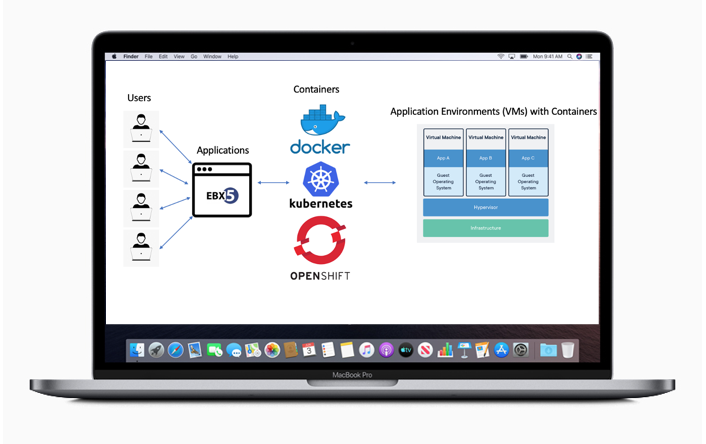
    Chapter 1: Introduction In our previous blog of this series we have established the fact that EBX can be deployed as a container. We deployed EBX on Docker to achieve our goal, in continuation to the same we will see how can we use OpenShift for the same purpose. What is OpenShift OpenShift is a family of containerization software products developed by Red Hat. Its flagship product is the OpenShift Container Platform — an on-premises platform as a service built around Docker containers orchestrated and managed by Kubernetes on a foundation of Red Hat Enterprise Linux. The family’s other products provide this platform through different environments: OKD serves as the community-driven upstream (akin to the way…

  • AI, ML & Data Science - Neural Networks - Deep Learning - Machine Learning

    Introduction to Neural Networks and Deep Learning with Real-World Use Cases: Deep Learning & Neural Network Basics

    🧠 What Are Neural Networks? At the heart of deep learning lies the neural network—a mathematical model inspired by the human brain’s structure. These networks are made up of layers of artificial neurons that pass information from one layer to the next. Each neuron receives input, performs a weighted computation, and passes it to the next layer through an activation function. Neural networks are particularly well-suited to learning non-linear relationships from data. They allow machines to detect intricate patterns in images, audio, or text—without explicitly being programmed for the task. A basic neural network includes an input layer, one or…

  • AI, ML & Data Science - Deep Learning - Machine Learning

    AI – Machine Learning & Deep Learning

    Getting Started with Machine Learning (ML) Machine learning projects typically follow a series of steps: data collection, data preprocessing, model selection, training, and evaluation. Here’s a breakdown of essential concepts and project ideas to help you get started. 1. Data Collection and Preprocessing Data is the foundation of any ML project. Collecting relevant, high-quality data ensures models have the information needed to identify patterns. Preprocessing steps—such as cleaning, normalization, and handling missing values—prepare raw data for analysis. Project Example: Predicting House Prices Using the famous Boston housing dataset, you can start by cleaning data and then normalizing it to improve…